Khe Sanh in Winter – Coffee Harvests, Sweetgum Forests and the Clouds of Truong Son
26-10-2026 16:21
Main contents
- 1. The Road to the Highlands – When the Weather Changes in Truong Son
- 2. Coffee Harvest Season – A Century of Roots in Red Earth
- 3. Sweetgum Forest by Rao Quan Lake – When Trees Tell Stories in Colour
- 4. Cloud Hunting – Learning to Welcome the Unpredictable
- 5. Khe Sanh – A Land Shaped by Many Layers of Time
- 6. More Stories from Khe Sanh
Some journeys stay with us not because of the scenery we hoped to see, but because of the unexpected stories nature has to tell.
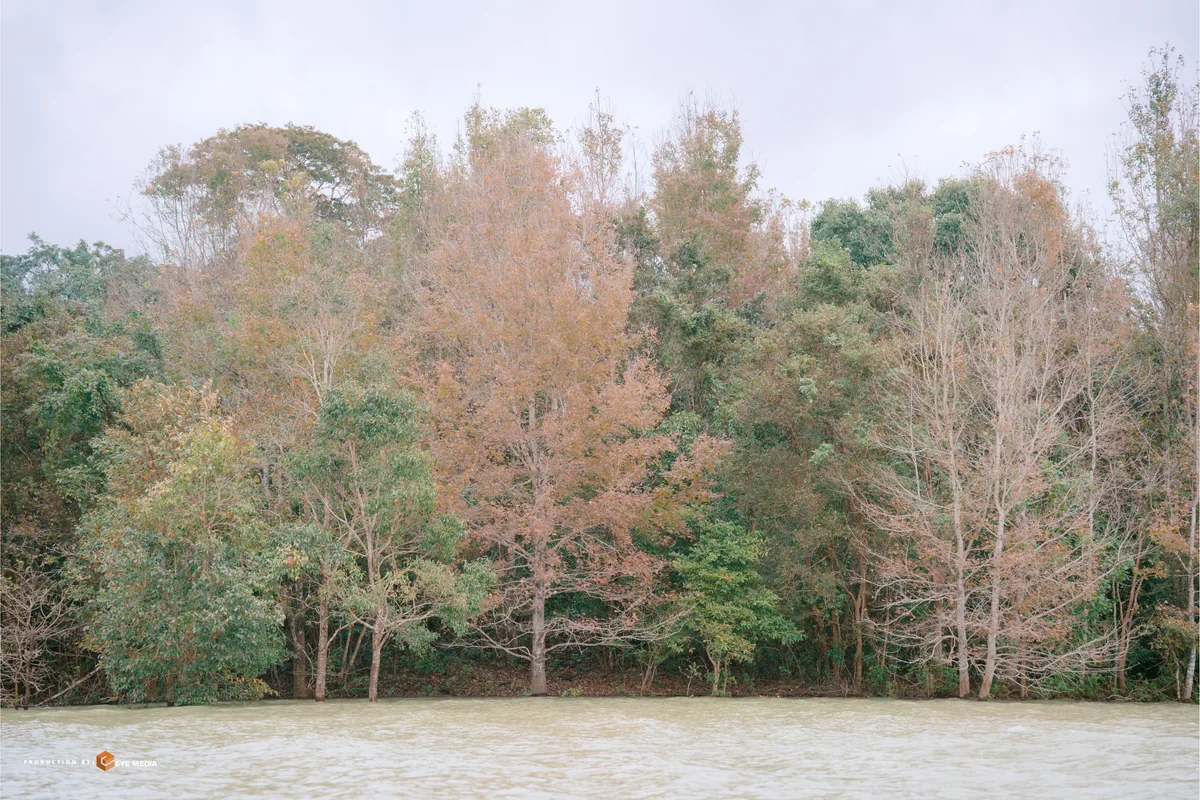
In late November 2025, during a visit to the sweetgum forest beside Rao Quan Lake, Phong Nha Viet's field notes captured an intriguing scene: trees near the water had already turned yellow and orange, while those higher up the hillside were still green.
On another visit in December, the forest looked different again. Many leaves had already fallen, and the red hues were less striking than the images travellers often imagine.
The same forest, yet no two encounters are ever quite alike.
That is the first thing to remember before setting out for Khe Sanh in winter: nature follows a calendar of its own.
And perhaps that is precisely why winter in Khe Sanh always gives us a reason to return.
The Road to the Highlands – When the Weather Changes in Truong Son
Leaving Dong Hoi, the journey west follows stretches of the Ho Chi Minh Road through the forests and mountains of the Truong Son Range.
The road does more than connect places. It takes us through shifting terrain, vegetation and climates.
At lower elevations, the forest is dense and the canopy closes overhead. Climbing higher, past Sa Mu, the landscape opens onto one mountain slope after another. Cloud and mist can gather quickly, then dissolve as the light changes.
In an earlier travel journal, a Phong Nha Viet writer described moments on the road through Sa Mu: mist veiling the tarmac, the damp chill of the forest, and unexpected glimpses of open sky around each bend.
This beauty has not been arranged for visitors. It arises from the terrain, altitude, moisture and ever-changing movement of air over the Truong Son Mountains.
For anyone who loves nature, simply travelling through these layers of landscape is worth the journey.
Coffee Harvest Season – A Century of Roots in Red Earth
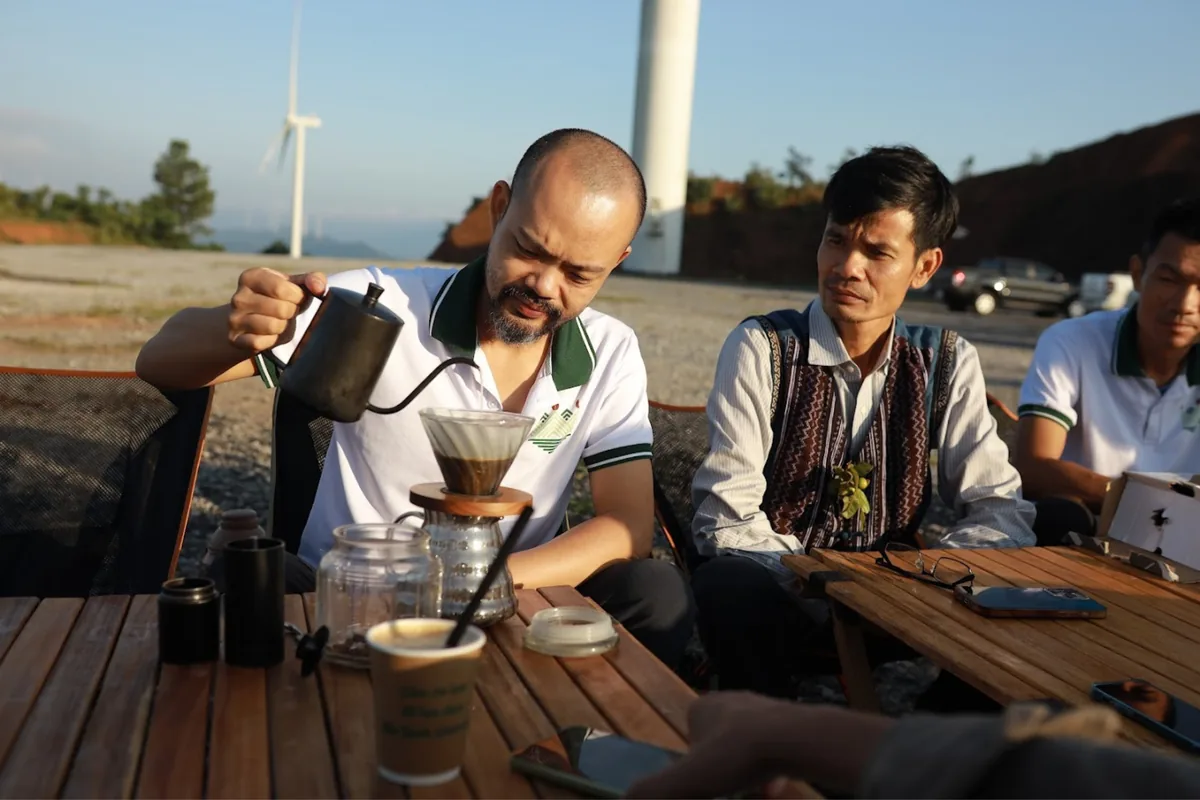
In Huong Phung, coffee is more than a drink.
Coffee has been part of this land for a century, from the first trees introduced in 1926 to the plantations tended by local farmers today.
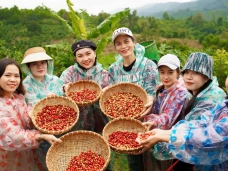
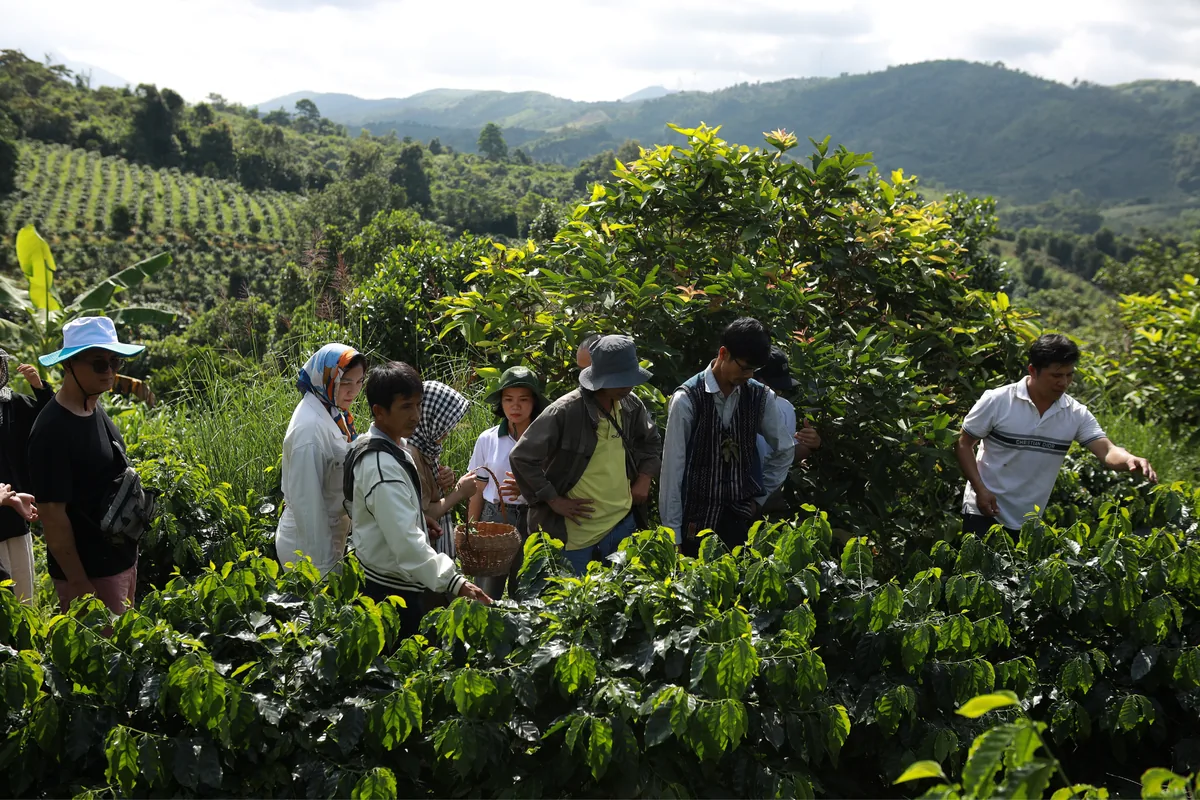
In November, travellers entering the Arabica-growing hills may see clusters of ripe red cherries against green leaves. During harvest, a farmer's work begins with selecting cherries at the right stage of ripeness, picking them, processing them and taking the beans through the stages that will eventually shape their flavour.
Seeing a cluster of coffee cherries on a branch and seeing a finished cup of coffee are two very different experiences.
Between them lie the soil, the weather, the craft and the labour of many hands.
That is why visiting a coffee farm can be far more memorable than simply stopping for a drink before moving on.
Visitors can learn why coffee grows on this red basalt soil, how the harvest unfolds, how farmers choose the cherries, and which natural conditions influence bean quality.
In Khe Sanh, that story is also intertwined with the land's history, with Bru–Van Kieu and Pa Ko communities, and with changes in livelihoods across generations.
A cup of coffee, then, can begin a story far longer than the taste it leaves behind.
By January, when the main Arabica harvest has generally passed, the experience shifts towards processing, roasting and tasting. Khe Sanh's appeal does not end when the last cherries of the season are picked.
Sweetgum Forest by Rao Quan Lake – When Trees Tell Stories in Colour
Beyond the coffee hills, another landscape unfolds beside Rao Quan Lake.
Here, stands of sweetgum trees, locally known as phong huong or sau sau, create a distinctive scene as their leaves change with the season.
The tree's scientific name is Liquidambar formosana. It is not the Japanese maple so often seen in photographs of autumn travel.
What makes it fascinating is the process of leaf colour change itself.
As the tree enters its seasonal leaf-shedding phase, chlorophyll declines, making yellow carotenoid pigments more visible. Under suitable conditions, the production and accumulation of anthocyanin pigments help create the red tones.
A leaf changing colour is more than a piece of natural decoration. It reflects physiological changes within the tree, influenced by light, temperature and environmental conditions.
That is why the transition is never entirely uniform.
One tree may already be red, another only beginning to turn yellow; some branches stand bare while nearby crowns remain green.
Against the waters of Rao Quan Lake, these colours create a distinctive landscape: patches of changing foliage woven among evergreen forest, the lake surface and distant mountain ranges.
Yet the forest's beauty does not depend on a single moment when the leaves are at their reddest.
Even after the leaves have fallen, visitors can observe the trunks, canopy structure, shafts of light filtering through the branches, and the ways vegetation responds to natural conditions.
If you come only to take a photograph, the visit may end very quickly.
If you come to understand a forest, there will always be more to discover.
And perhaps what the sweetgum forest needs from visitors is not admiration alone, but the care that allows these seasonal changes to return year after year.
Cloud Hunting – Learning to Welcome the Unpredictable
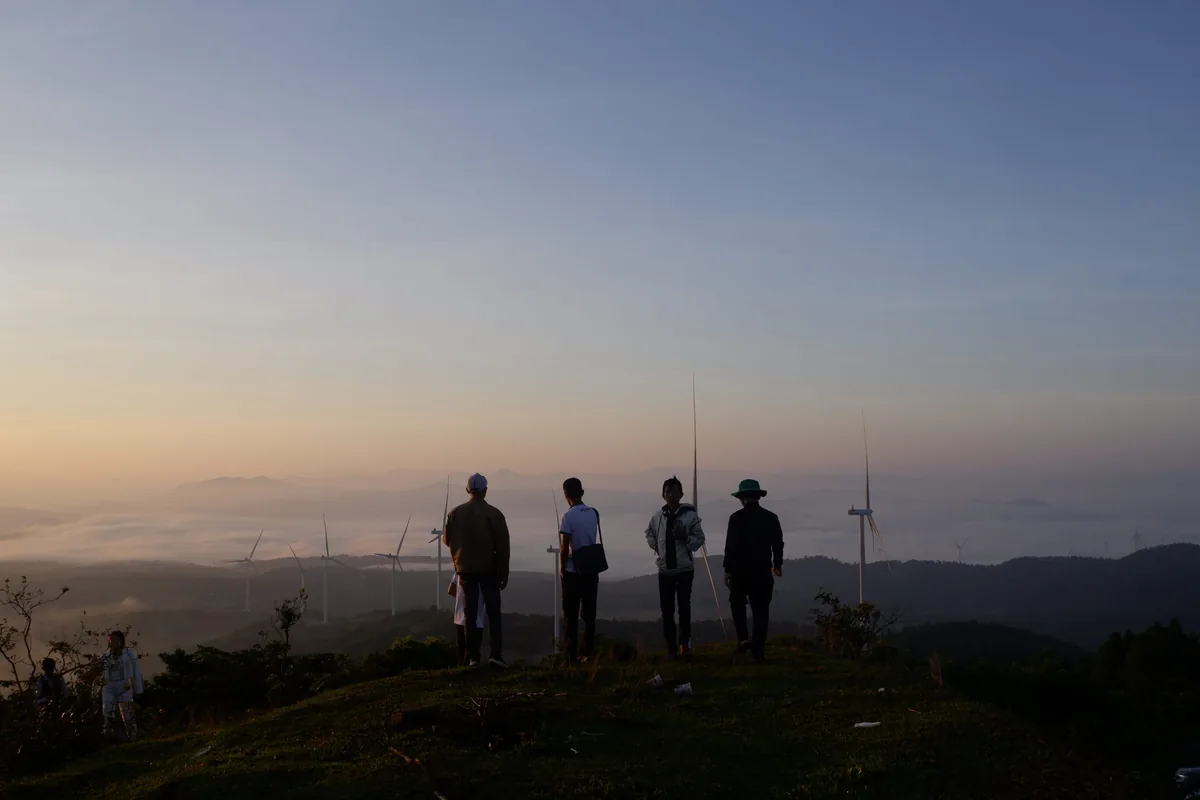
In Khe Sanh, many people rise long before dawn, hoping to see clouds gathering around the high mountain slopes.
But not every morning brings a sea of clouds.
On some days, thick mist obscures the view. On others, the clouds disperse before sunrise. And there are clear mornings when the valleys and ridges appear in full detail, without the floating white clouds seen in travel photographs.
Cloud hunting, in other words, is a date with the weather, not an experience any itinerary can promise.
What is interesting is that, even without a sea of clouds, a highland morning offers its own rewards: the early chill, the changing light on the mountain slopes, wind moving through the valleys, and the sense of space expanding as day breaks.
Sometimes waiting is what makes us notice the things we might otherwise overlook.
Clouds are not the whole of Khe Sanh's beauty. They are only one part of a landscape in constant motion.

Khe Sanh – A Land Shaped by Many Layers of Time
Khe Sanh has another depth that cannot be separated from its present-day landscape: history.
Places such as Ta Con, Lang Vay and Route 9 are linked to a devastating period of war. Meanwhile, coffee farms, villages, farmstays and tourism tell a story of life continuing after the conflict.
Standing in today's landscape, we might ask: how does a place that has undergone such profound upheaval continue to sustain people, forests and new harvests?
A short journey cannot fully answer that question.
But every stop, encounter and local story may help travellers understand another part of it.
Perhaps that is the enduring appeal of Khe Sanh.
It is not only about ripe coffee cherries, red leaves or a sea of clouds.
It is also about the soil, the forest, the people and the passing of time – the elements that make a place distinctive and worth remembering.

Khe Sanh does not need a perfect winter to be worth the journey.
We need only arrive with enough curiosity, give ourselves enough time, and be willing to look beyond what first meets the eye.
Phong Nha Viet – Travel to Understand a Place.
Editorial note: This article draws on Khe Sanh travel journals published by Phong Nha Viet in 2025 and information about seasonal conditions. It is not a field diary from a new visit during winter 2026–2027. New observations, photographs and accounts from local people should be added and verified before presenting it as a new on-site travel journal.
PHONG NHA VIET · TRAVEL TO UNDERSTAND A PLACE
More Stories from Khe Sanh
Discover the forests, winding roads and people of the highlands through firsthand travel stories.
- Khe Sanh – The Red Leaf Season by Rao Quan Lake
- A Two-Day Journey to Khe Sanh from Dong Hoi via the Ho Chi Minh Road West
- Phong Nha to Khe Sanh 2D1N: A Journey with Olaf
SUGGESTED JOURNEY
Explore Khe Sanh – 3 Days, 2 Nights Roadtrip


Comments
Comments (Total 0)
Related Articles

28-08-2026
KIẾN GIANG – DÒNG SÔNG CHỞ KÝ ỨC XỨ LỆ

15-08-2026
Dong Hoi – Cam Ranh: Discover Khanh Hoa 2026

19-06-2026
MINI GAME CHINH PHỤC CỒN CỎ

24-04-2026