


Phong Nha to Khe Sanh 2D1N: Cloud Hunting, Ta Con Airfield and Lao Bao Border
15-12-2025 12:00
Main contents
- 1. Day 1: From Phong Nha along the Western Truong Son Road — a route of nature and history
- 2. A stop at Homi Café — when the plateau opens up before you
- 3. Ta Con Airfield — where history still feels present
- 4. A Van Kieu village — where life still moves slowly, as it always has
- 5. A highland night at Nam Mua Bungalow
- 6. Day 2: Hunting clouds — the border — the rhythm of a gateway region
- 7. Lao Bao Border Gate — where a boundary feels surprisingly close
- 8. Lao Bao Market — everyday pieces of border life
- 9. More than one trip
A 2-day, 1-night journey with Olaf — our guest from Germany — was not simply a drive from Phong Nha to Khe Sanh, but a string of gentle moments shaped by nature, history, and people. Along the winding Western Truong Son road, every bend brought a new story, and every stop felt like opening another layer of memory.
Day 1: From Phong Nha along the Western Truong Son Road — a route of nature and history
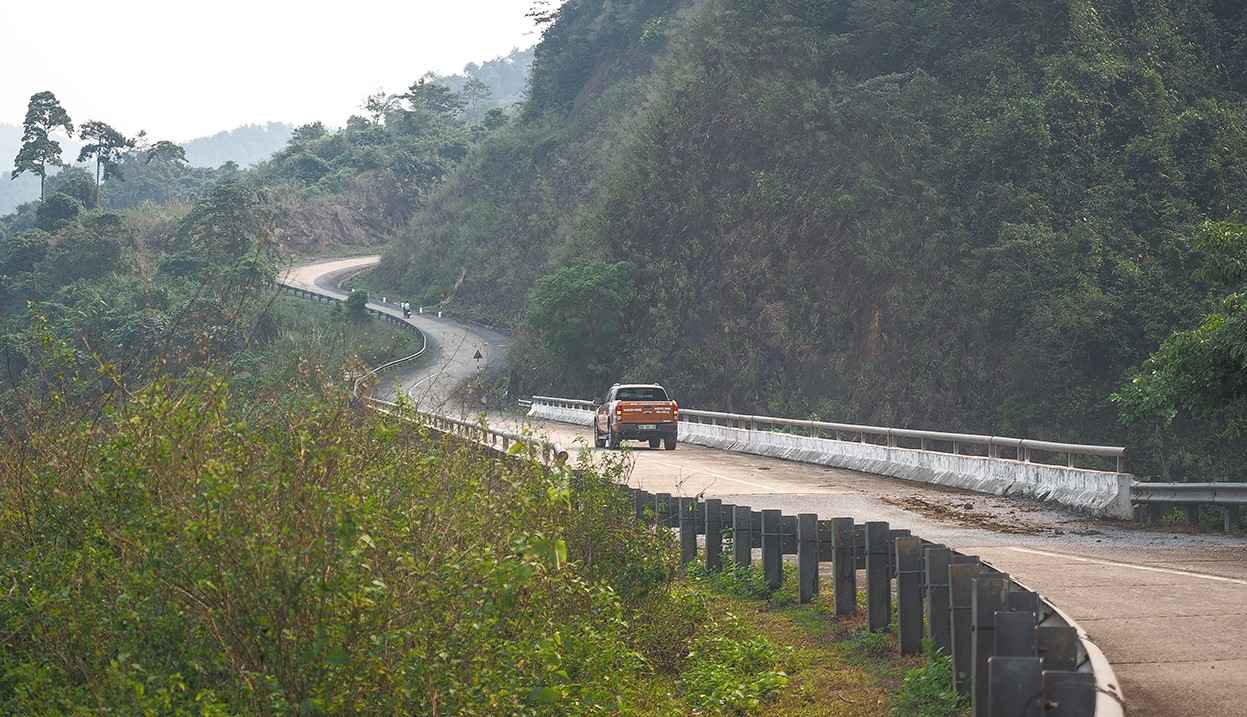
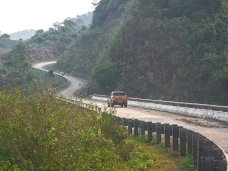
We left Phong Nha early in the morning, while mist still clung to the roadside treetops. The car began to follow the Western Truong Son Road — a route that is neither loud nor crowded, yet always makes you slow down.
On one side, green forest after green forest, rising in layers. On the other, deep valleys where small streams glinted in the early sunlight. In some stretches, you could hear almost nothing but the tyres rolling and the wind slipping past the windows. Olaf sat in the back, eyes fixed on the view. Now and then he lifted his camera to take a shot, then lowered it again, as if he did not want to break the stillness.
I did not need to say much. This road tells its own story..
A stop at Homi Café — when the plateau opens up before you
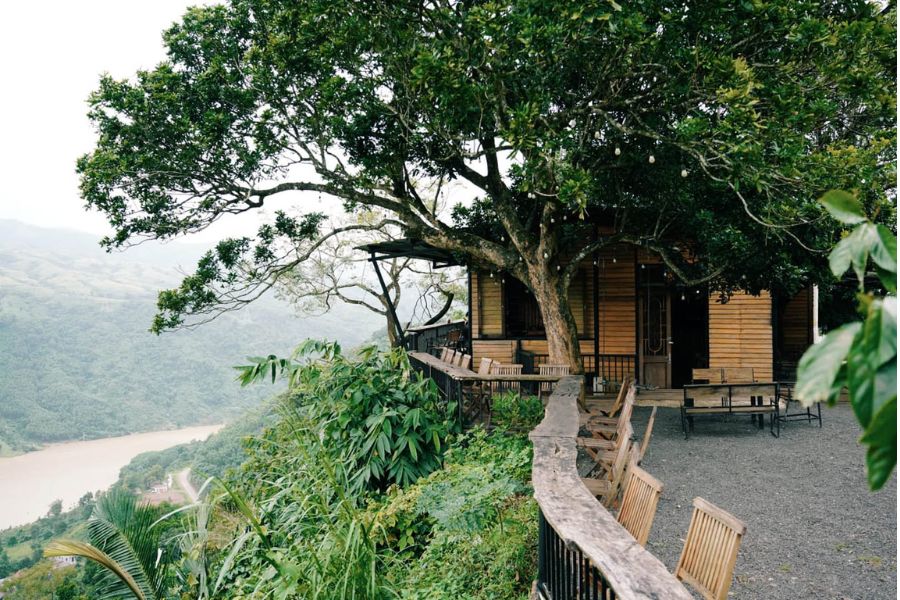
Our first stop was Homi Café on the hillside. Sitting high and open to the sky, it offers a view that feels very much like Khe Sanh: mountains folding into mountains, deep valleys, and a river winding softly in the distance.
A hot coffee in the plateau’s cool, fresh air seemed to melt away any tiredness. Olaf took a small sip, breathed in, and said slowly,
“It’s so quiet… and so real. I like places like this.”
There was no loud music here, no carefully staged photo corners. Just wind, clouds, and a space wide enough for people to fully relax. I watched Olaf sit there for a long time, unhurried, as if he was letting Khe Sanh settle naturally into his memory.
Ta Con Airfield — where history still feels present
Leaving Homi Café, we continued to Ta Con Airfield, a place closely tied to some of the harshest years of the war. The space is wide and bare, with old runways, rusted aircraft remains, and information boards standing quietly in the sun and wind of the highlands.
I told Olaf about the Battle of Khe Sanh in 1968 — about the days of bombs and fire, and how this land once became a focal point for the whole world. He listened carefully, nodding now and then, his expression turning more thoughtful. As a German, he has a particular way of approaching history — not to compare or judge, but to understand.
In that silence, history no longer belonged to books. It was there in the red earth under our feet, in the wind moving across the runway, in a heaviness that is difficult to name..

A Van Kieu village — where life still moves slowly, as it always has
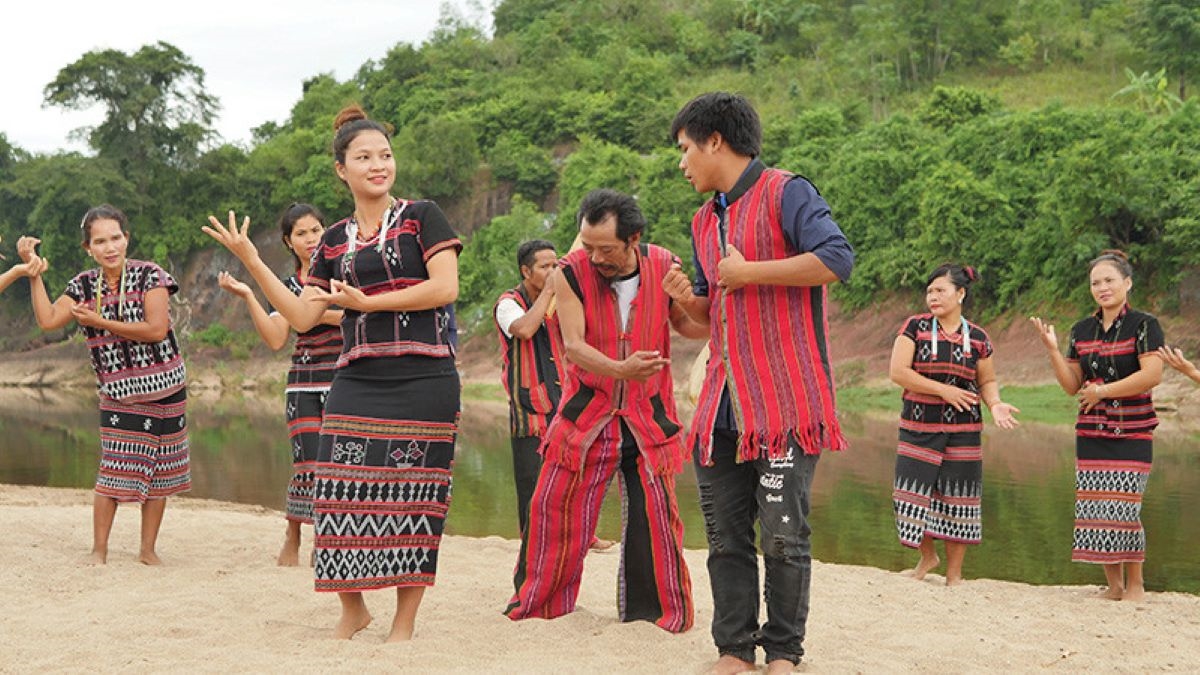
In the afternoon, we visited a Van Kieu village, where life keeps a rhythm very different from the city. Simple houses, children playing in the yard, adults chatting on verandas.
Olaf met local people and listened to stories about daily customs and the close bond between human life and the mountains and forests. He especially liked how naturally everything unfolded — nothing staged. Gentle smiles, small nods of greeting, everyday conversations — all of it created a warmth that is hard to find in crowded tourist spots.
A highland night at Nam Mua Bungalow
As sunset fell, we returned to Nam Mua Bungalow to rest. The place is quiet and close to nature; warm yellow light from the small bungalows makes it feel cosy.
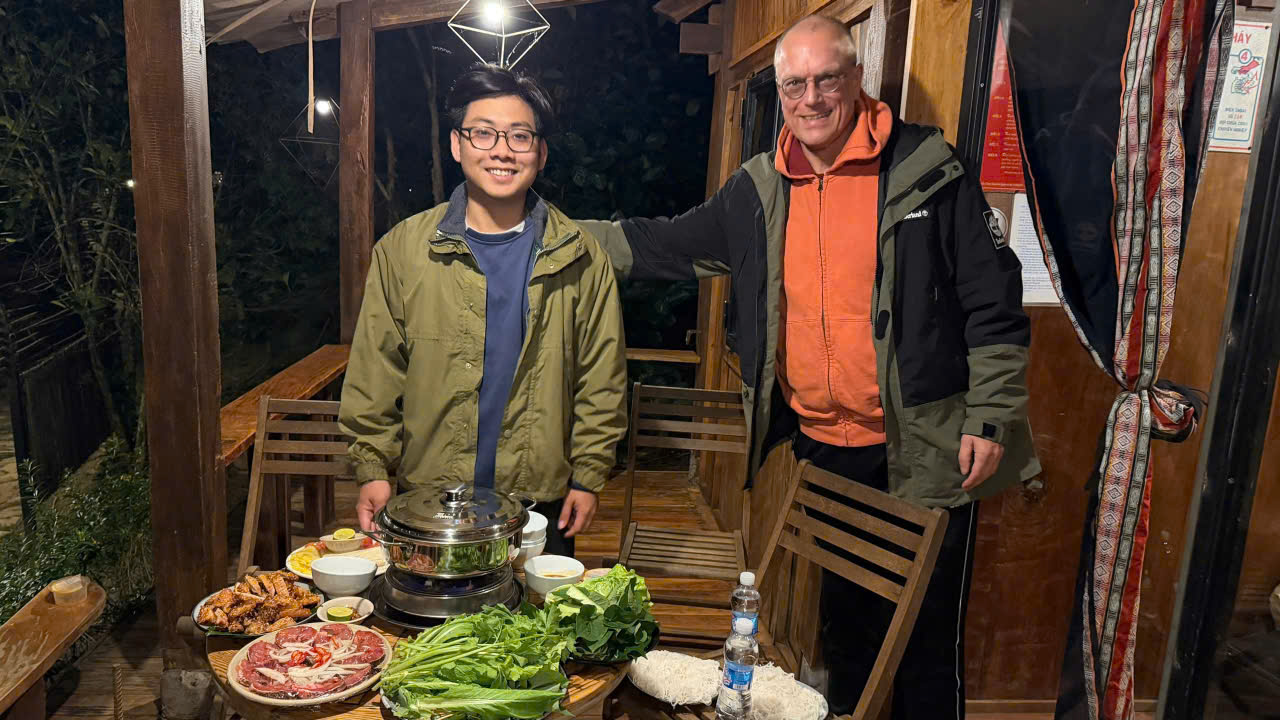
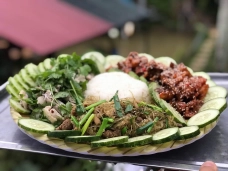
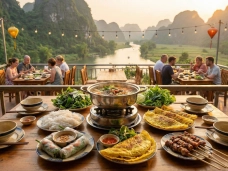
Dinner was a steaming snakehead fish hotpot and grilled local pork — simple dishes, but rich with the flavours of the mountains. In the cool highland air, sitting around the table after a long day on the road, every conversation seemed to slow down as well.
Olaf smiled and said he did not need fancy restaurants. A meal like this, in a peaceful place, was enough to remember for a long time.
Day 2: Hunting clouds — the border — the rhythm of a gateway region
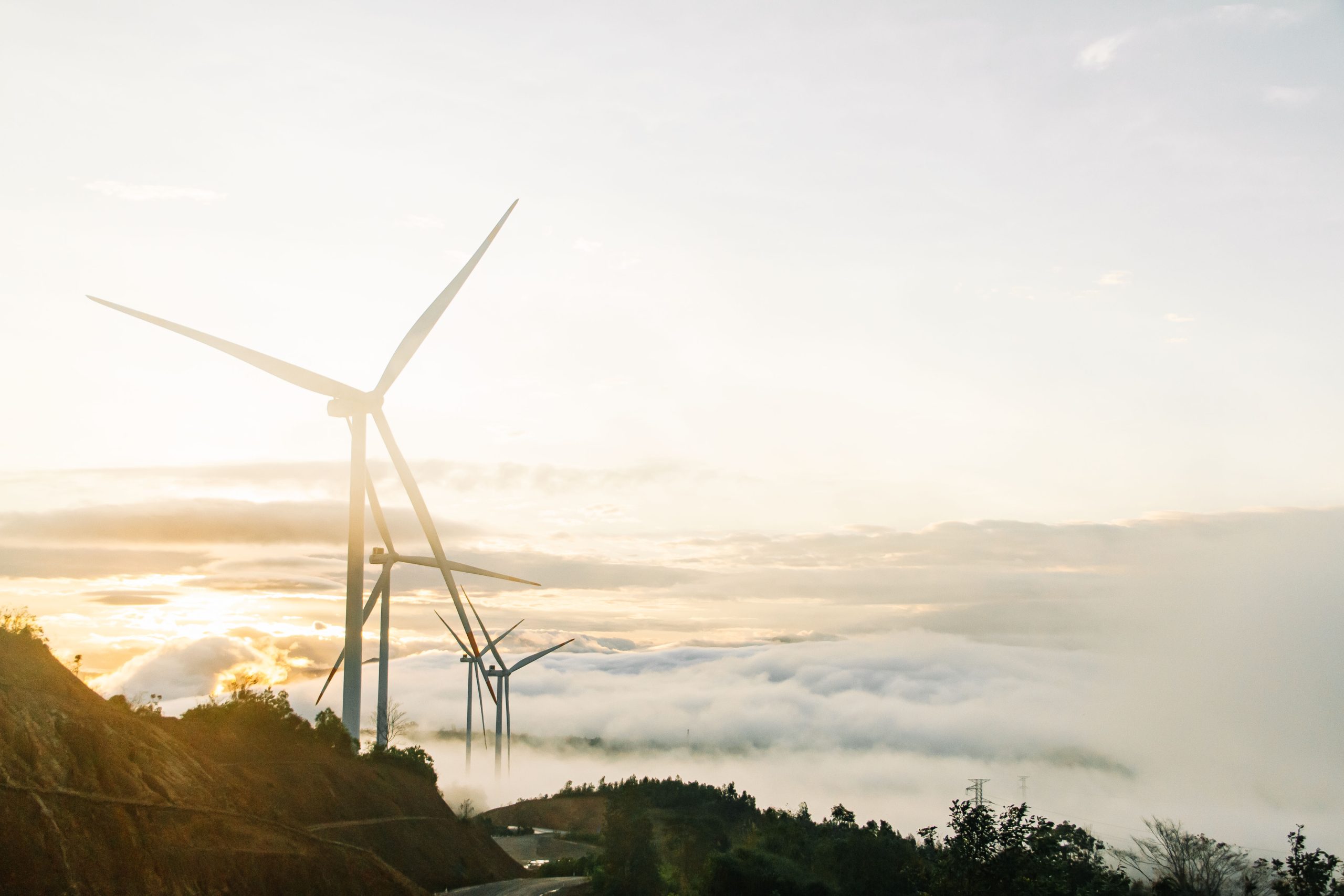
We woke very early, while the air was still thick with mist, to go cloud-hunting at the Huong Hoa wind farm. The wind was strong, the cold had a bite — and then, as the sun rose, white bands of cloud began to drift lazily beneath the towering wind turbines.
The whole landscape felt split into two levels: blue sky above, a floating sea of cloud below. Olaf stood there for a long time, saying almost nothing. In some moments, silence is the most complete way to take everything in.
Lao Bao Border Gate — where a boundary feels surprisingly close
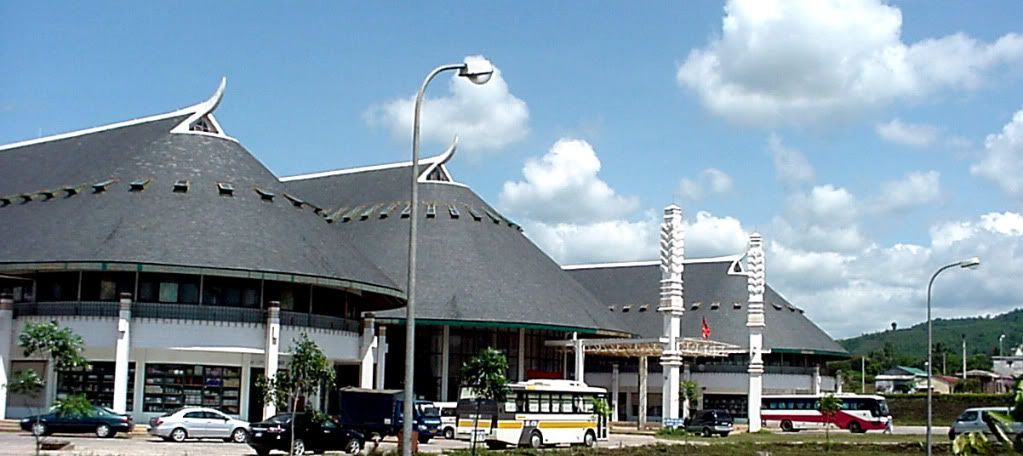
From the cloud viewpoint, we travelled to the Lao Bao International Border Gate and took photos at the Vietnam–Laos border marker. Standing there, Olaf looked genuinely delighted. For him, it was not just a “check-in” spot, but a place where you can truly sense cultures meeting — different lands, different lives, yet still connected.

Lao Bao Market — everyday pieces of border life
Our final stop was Lao Bao Market. Not too noisy, but lively enough to feel the everyday rhythm of trade in a border town. Small stalls, familiar-yet-unfamiliar goods, and brief conversations between buyers and sellers.
Olaf bought a few small gifts to take home — not for their price, but because each one carried a memory, a small and personal slice of this journey
More than one trip
For me, Khe Sanh is not loud or showy. Its beauty lies in the wind, the clouds, the history, and the people. And travelling with guests like Olaf only makes me believe this even more:
Travel is not just about going somewhere — it is about feeling, learning, and understanding.
If you are looking for a slow, meaningful journey with the true character of the highlands, Khe Sanh is absolutely a place worth experiencing.
Phong Viet


Comments
Comments (Total 0)
Related Articles
28-08-2026
KIẾN GIANG – DÒNG SÔNG CHỞ KÝ ỨC XỨ LỆ
15-08-2026
Dong Hoi – Cam Ranh: Discover Khanh Hoa 2026

19-06-2026
MINI GAME CHINH PHỤC CỒN CỎ
24-04-2026
DMZ Vietnam Travel Guide 2026





12-12-2025