


Khe Sanh – Huong Hoa: A Frontier Land of History
26-06-2026 11:01
Main contents
From a Frontier Land to the Flavour of Speciality Coffee
Khe Sanh – Hướng Hóa is a highland area in the west of Quảng Trị Province, located on Route 9, which connects Đông Hà with Lao Bảo and neighbouring Laos. This land became known to the world through the Route 9 – Khe Sanh battlefield in 1968, Lao Bảo Prison, Tà Cơn Base, Làng Vây and the harsh memories of war. Yet Khe Sanh – Hướng Hóa is not only about bombs and battles. It is also the cultural space of the Vân Kiều and Pa Kô people, a basalt-red land of Hướng Phùng where Arabica coffee has taken root for nearly a century and is now becoming a symbol of revival in western Quảng Trị.
The Origins of Khe Sanh – Hướng Hóa
During the Lê dynasty and the period of the Nguyễn lords, the mountainous area in the west of present-day Quảng Trị was not yet a stable administrative unit like today’s Hướng Hóa District. It was a frontier space on the western side of Thuận Hóa, where the royal court exercised a layered form of administration through lowland prefectures and districts, together with the nguồn, sách, châu and mường units of the indigenous Trường Sơn communities. Under the Nguyễn dynasty, especially during the reign of Emperor Minh Mạng, the administrative boundaries of this region became more clearly defined: in 1822, Hướng Hóa Châu was established under Cam Lộ Đạo; in 1834, Hướng Hóa Châu was changed into Hướng Hóa District. Therefore, Khe Sanh – Hướng Hóa may be seen as a strategic frontier area linking Thuận Hóa with the Lao world, but it should not be imagined as a fixed border in the sense of a modern national map.
Before becoming known as a military place name in the twentieth century, Hướng Hóa had long been a living space of the Trường Sơn communities, especially the Bru – Vân Kiều and Pa Kô people. The Bru – Vân Kiều live mainly in western Quảng Trị, Quảng Bình and Thừa Thiên Huế; their language belongs to the Mon–Khmer group of the Austroasiatic language family [1]. This helps explain why many place names in Hướng Hóa carry an indigenous sound, unfamiliar yet evocative of the mountains and forests: Tà Cơn, Tà Rụt, Sa Mù, Sê Pôn, Rào Quán, Chênh Vênh, Hướng Phùng…
This was not a “peripheral” region in the sense of being forgotten, but an important cultural and ecological buffer zone. Streams, trails, mountain slopes and valleys once connected communities moving back and forth across both sides of the Trường Sơn Range. Under the Nguyễn dynasty and later during the French colonial period, the position of Lao Bảo – Hướng Hóa drew increasing attention as a western border gateway of Central Vietnam, located near the Sê Pôn River and the transport route to Laos [2].
Route 9, Lao Bảo Prison and the First Coffee Seeds
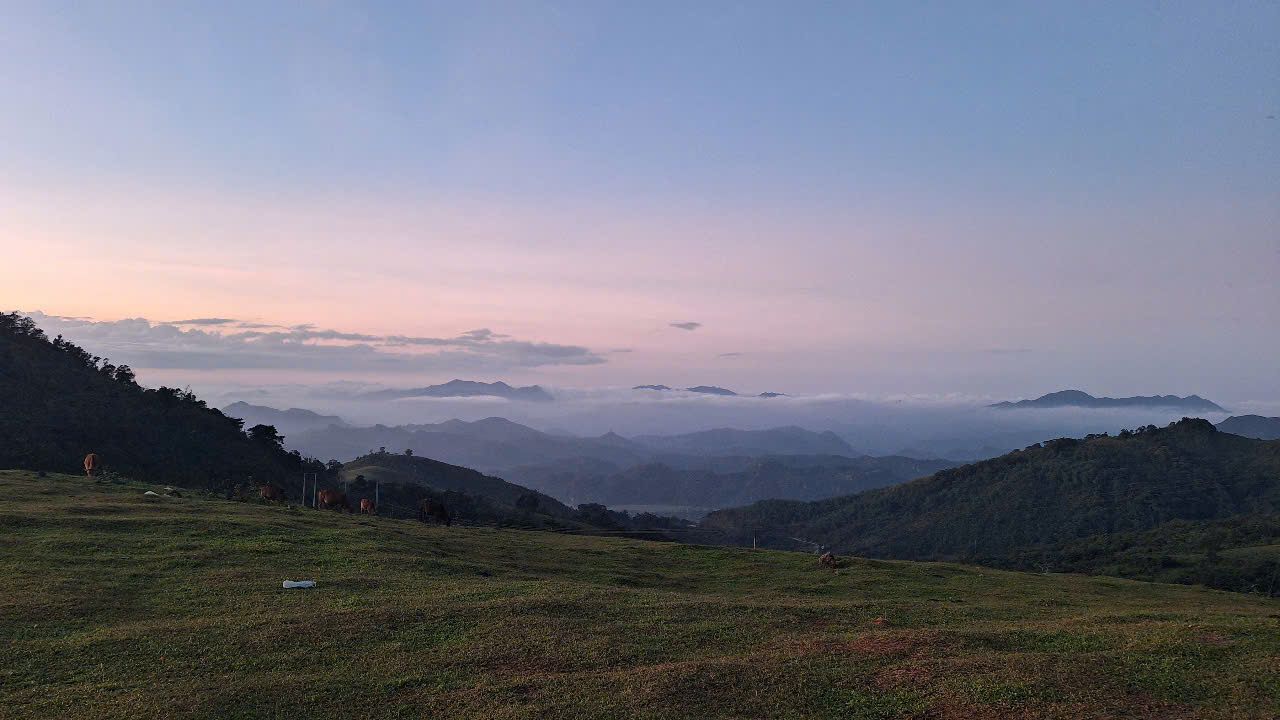
In the early twentieth century, the French opened and completed Route 9, the road connecting Đông Hà – Khe Sanh – Lao Bảo and continuing towards Laos. In international materials on Eugène Poilane, Route 9 is described as the first macadamised road linking this area with Laos; when Poilane passed through Khe Sanh in 1918, the place was still very sparsely populated [3].
Along Route 9, Hướng Hóa witnessed two contrasting marks of the colonial period.
On the one hand, in 1908, the French colonial authorities built Lao Bảo Prison on an area of about 10 hectares, isolated from residential settlements. It was initially used to detain Vietnamese patriots who resisted French rule; after 1929–1930, it was expanded to imprison communist prisoners [2]. Lao Bảo Prison was once one of the major prisons in Indochina, where many revolutionary activists were detained, including Tố Hữu, Nguyễn Chí Thanh and many others from Central Vietnam [2]. The site was recognised as a national historical relic in 1991 [2].
On the other hand, it was also during this period that Khe Sanh began to be associated with another story: coffee. Eugène Poilane, a French botanist, first passed through Khe Sanh in 1918. Fascinated by the red basalt soil and highland vegetation, he returned in 1926 to establish a coffee plantation and introduced the Chiari coffee variety here [3]. Poilane’s plantation was located in an area that would later be associated with Khe Sanh Base during the war [3].
From that time on, Khe Sanh was not only a place name on administrative or military maps. It also became the place where the first coffee seeds took root, beginning a distinctive agricultural story that has continued to the present day.
The First Coffee Variety in Khe Sanh
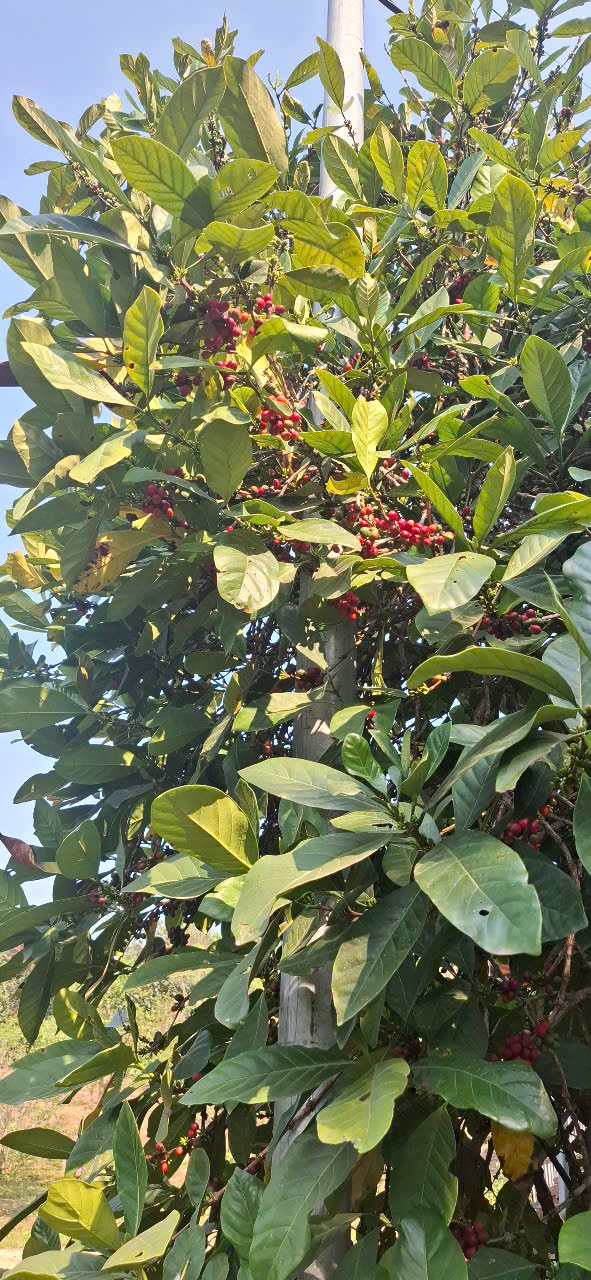
Regarding the history of coffee in Khe Sanh, many sources indicate that in 1918, the French botanist Eugène Poilane first passed through the Khe Sanh area and recognised the potential of its basalt-red soil for perennial crops. In 1926, he returned to establish a coffee plantation and introduced the Chiari coffee variety. Vietnamese sources today often interpret Chiari as cà phê mít, or Liberica coffee – a type of coffee with a tall trunk, large leaves and strong vitality, well suited to the highland conditions of Khe Sanh. Therefore, when referring to the “first coffee seeds” of Khe Sanh, it is more accurate to mention Chiari/cà phê mít/Liberica coffee, rather than immediately equating it with Arabica, the coffee line associated with the Khe Sanh brand today.
Route 9 – Khe Sanh, 1954–1975
After the Geneva Accords of 1954, Quảng Trị became a frontline region associated with the 17th parallel, the Bến Hải River, Hiền Lương Bridge and the Demilitarised Zone. In that context, Hướng Hóa – Khe Sanh held a particularly strategic position on Route 9, near the Vietnam–Laos border and connected to the Trường Sơn transport system.
During the resistance war against the United States, the Trường Sơn Road – Hồ Chí Minh Trail became a strategic system of transport, communication and supply routes running through many provinces, including Quảng Trị. This system was ranked as a special national relic under Decision No. 2383/QĐ-TTg dated 09 December 2013 [4].
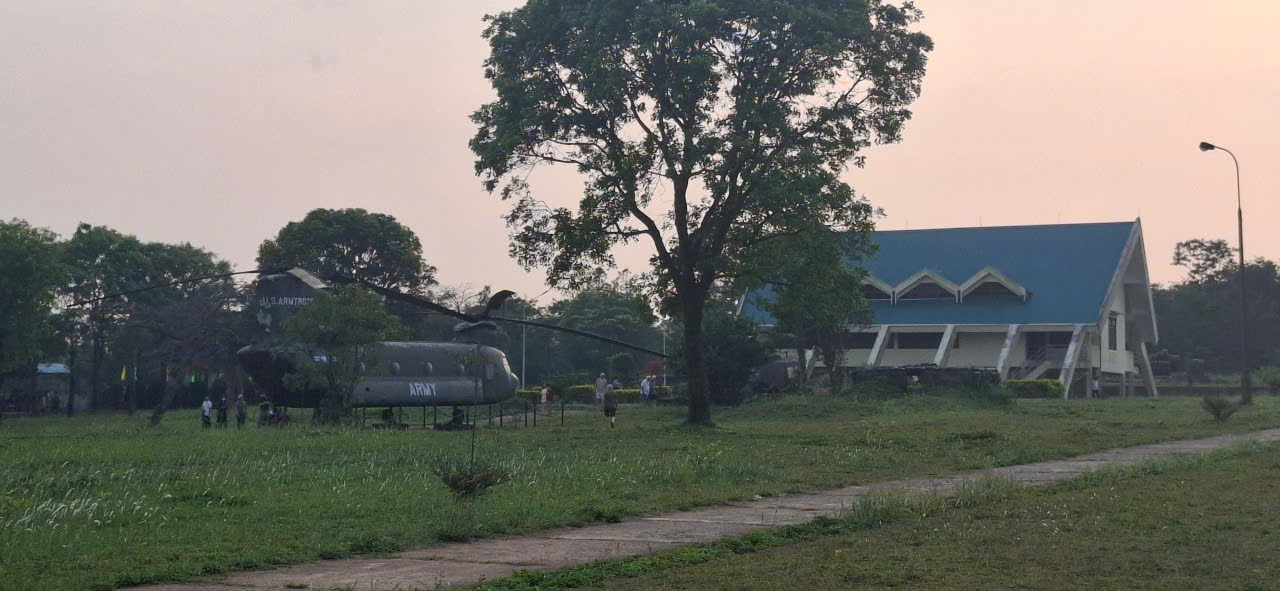
The peak of this strategic role was the Route 9 – Khe Sanh Campaign in 1968. According to Vietnamese sources, the campaign began on the night of 20 January 1968, ten days before the General Offensive and Uprising of the Lunar New Year 1968; battles in Hướng Hóa, Huội San, Làng Vây and along Route 9 forced the opposing side to disperse its forces across several fronts [5]. According to a United States source, the Battle of Khe Sanh took place from 21 January to 9 July 1968; the siege of Khe Sanh Base is often referred to as a 77-day period [6].
For that reason, calling Khe Sanh a “fire pan” or “crucible” has a basis in historical memory, but the expression should be used without emotional exaggeration. More precisely, Khe Sanh was a place where many strategic layers converged: a military base, a transport corridor, a diversionary point, a western stronghold of Quảng Trị and a symbol of a confrontation that attracted international media attention.
The war left this land with deep wounds: unexploded ordnance, overturned soil, displaced villages and broken livelihoods. Yet it was precisely in such circumstances that the endurance of Hướng Hóa’s land and people was tested to the limit. Vân Kiều and Pa Kô communities, Kinh settlers who came to build new economic zones, veterans and post-war generations worked together to rebuild life from the red soil.
Peace and Revival
After 1975, Hướng Hóa entered a different journey: clearing mines and unexploded ordnance, restoring production, rebuilding villages and seeking sustainable livelihoods. In that journey, coffee returned as a natural choice for this basalt-red land.
The natural conditions of Hướng Hóa offer many advantages for Arabica coffee: basalt-red soil, elevations of about 450–1,000 metres, a mild climate, relatively high rainfall, high humidity and dry-season mist that helps provide moisture for coffee trees [8]. Areas such as Hướng Phùng, Hướng Tân, Tân Lập and Khe Sanh gradually developed into specialised coffee-growing zones, with Arabica/Catimor becoming the main line.
If Poilane’s time was the era of plantations and experimentation, today is the era of farming households, cooperatives, local enterprises and quality standards. Khe Sanh coffee is no longer merely sold as a raw agricultural product; it is increasingly told through stories of origin, growing region, processing methods, traceability and indigenous culture.
A notable milestone was the Vietnam Specialty Coffee Competition in 2021. At this competition, the Khe Sanh Arabica product of Pun Coffee Co., Ltd., based in Hướng Phùng Commune, Hướng Hóa District, won First Prize in the Arabica category [7], [8]
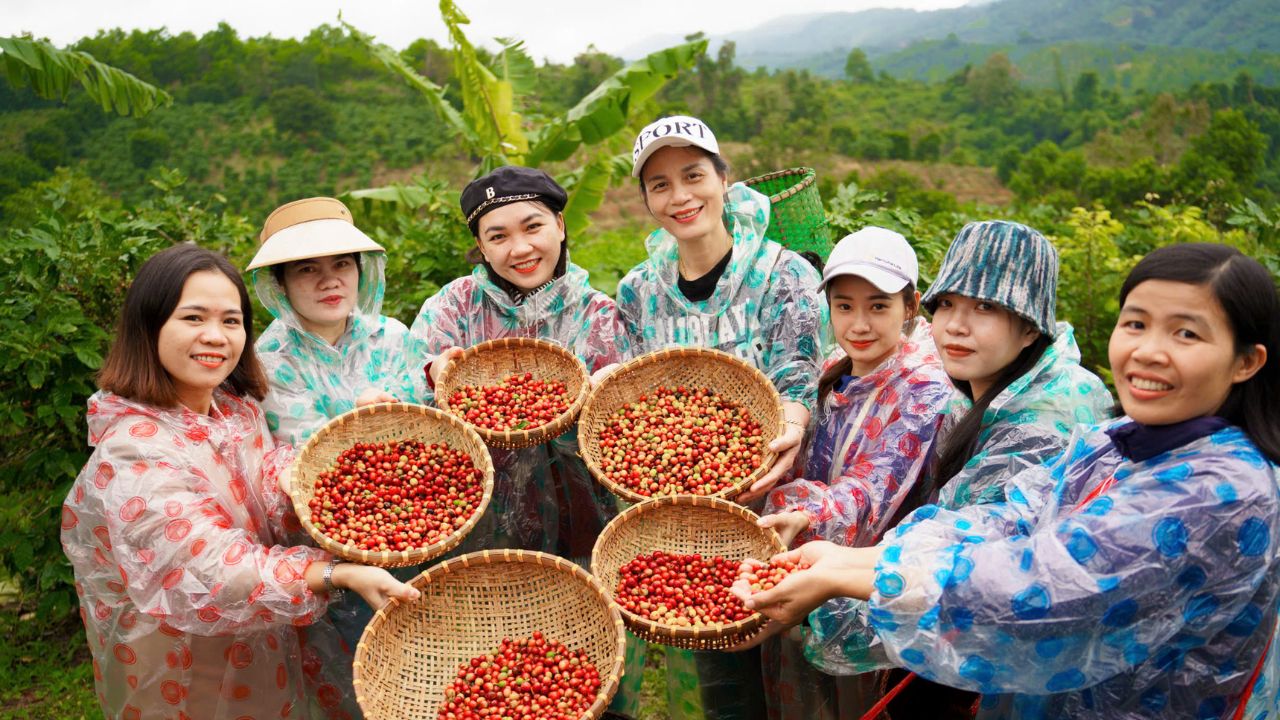
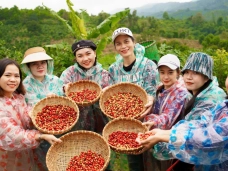
That achievement did not come by chance. It was created by the highland climate, basalt soil, growers’ experience, the shift from strip-picking to harvesting ripe cherries, from selling raw materials to deep processing, and from fragmented production to value-chain linkages. Behind this story are the hands of Vân Kiều, Pa Kô and Kinh farmers in the highlands, together with local cooperatives and enterprises striving to take Khe Sanh coffee beyond the provincial boundary.
The year 2026 marks a symbolic milestone: 100 years since Poilane returned to Khe Sanh to establish his coffee plantation in 1926. Over the course of a century, the coffee bean has passed through colonial rule, war, poverty, reconstruction and integration. From the memory of the old plantation, Khe Sanh coffee today is becoming a cultural, agricultural and tourism product with real depth.
In Lieu of a Conclusion
Khe Sanh – Hướng Hóa is not only about war. If we look at this land only through bombs and bullets, we will forget its indigenous cultural depth, the Sê Pôn River, the coffee slopes in the morning mist, the sounds of gongs and the Ta-lư lute, and the resilient life of the Trường Sơn communities.
The history of Khe Sanh is a symphony with many low notes: frontier life, imprisonment, battlefields and loss. Yet that same symphony also carries high notes: revival, labour, speciality coffee, community-based tourism and the aspiration for peace.
Today, standing in Hướng Phùng and looking at the green coffee hills on basalt-red soil, we understand that history does not live only in museums or in the name of a military campaign. It also remains in the coffee bean, in the hands of those who pick ripe cherries, in Route 9 connecting Đông Hà with Lao Bảo, in the memories of those who survived war, and in the affection of travellers who have fallen in love with the Trường Sơn mountains.
“Here in Hướng Phùng, basalt soil nurtures life,
Coffee gardens ripen beneath the mountain mist.”
References
[1] Nhân Dân Newspaper, “The Bru – Vân Kiều Ethnic Group,” 2022.
[2] Quảng Trị Department of Culture, Sports and Tourism, “Lao Bảo Prison,” Quảng Trị Tourism Portal.
[3] C. A. McCormick, “Eugène Poilane,” North Carolina Botanical Garden, University of North Carolina at Chapel Hill, 2021, updated 2024.
[4] Department of Cultural Heritage, Ministry of Culture, Sports and Tourism of Vietnam, “The Trường Sơn Road – Hồ Chí Minh Trail Historical Relic.”
[5] People’s Army Newspaper, “The Route 9 – Khe Sanh Campaign: A Strategic Diversion for the General Offensive and Uprising of the Lunar New Year 1968,” 2024.
[6] Defense POW/MIA Accounting Agency, United States Department of Defense, “Khe Sanh Incident.”
[7] VietnamPlus/Vietnam News Agency, “Winners of Vietnam Specialty Coffee Competition Announced,” 2021.
[8] Quảng Trị Department of Agriculture and Rural Development, “Provision of Information on the Potential for Coffee Production Cooperation with Cuba,” 2021.
[9] Quảng Trị Department of Culture, Sports and Tourism, “The Aroma of Khe Sanh Coffee – The Land and People of Quảng Trị,” 2025.
[10] Department of Cultural Heritage, Ministry of Culture, Sports and Tourism of Vietnam, “The Historical Relic of the Hiền Lương – Bến Hải Banks.”


Comments
Comments (Total 0)
Related Articles
28-08-2026
KIẾN GIANG – DÒNG SÔNG CHỞ KÝ ỨC XỨ LỆ
15-08-2026
Dong Hoi – Cam Ranh: Discover Khanh Hoa 2026

19-06-2026
MINI GAME CHINH PHỤC CỒN CỎ
24-04-2026
DMZ Vietnam Travel Guide 2026






12-12-2025