


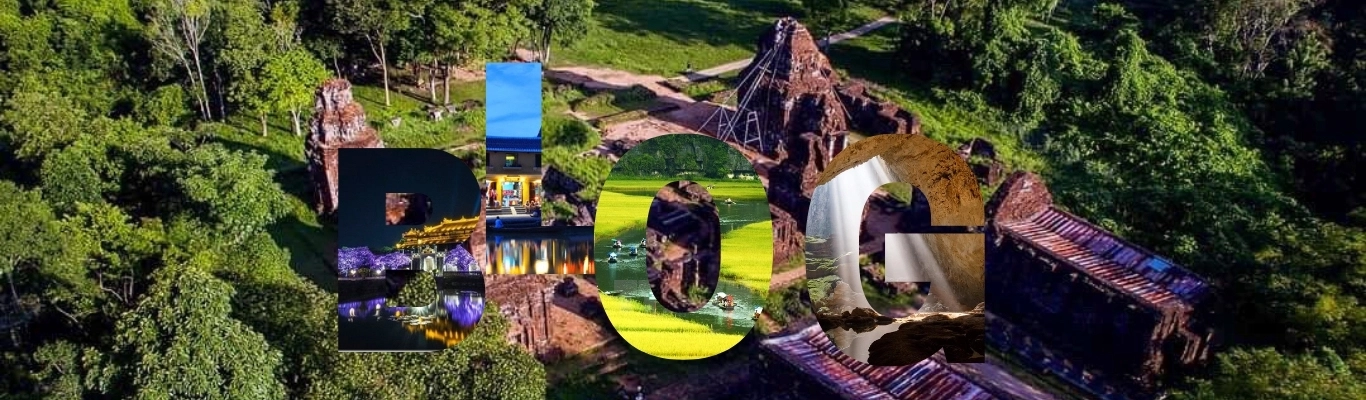
Hue – Phong Nha Heritage Train: A Journey Between Two World Heritage Destinations
25-08-2026 06:46
Main contents
Some train journeys simply take you to a destination. But there are others where every station opens the door to another world of heritage.
The Hue – Phong Nha train journey is one of them.
Covering just 189 kilometres and stopping at five stations — Hue – Dong Ha – My Trach – Dong Hoi – Tho Loc — the train carries travellers from an ancient imperial capital through landscapes shaped by war and peace, villages along the Kien Giang River, the coastal city beside the Nhat Le River, and finally to the gateway of Phong Nha – Ke Bang, a spectacular karst landscape with a geological history stretching back around 400 million years.
Sit by the window and you will soon realise that this is far more than a train ride.
It is a journey through the heart of Central Vietnam.
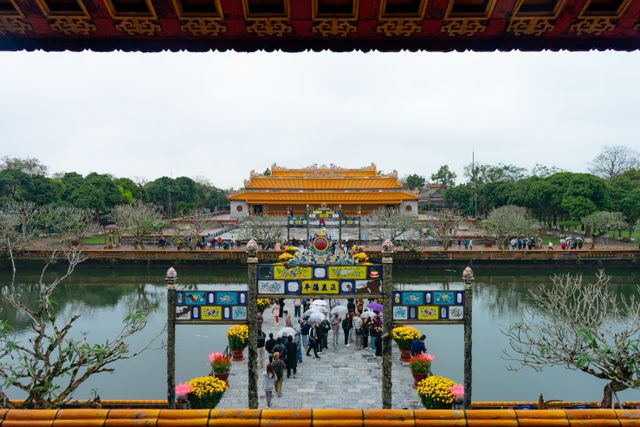
HUE – BEGINNING IN AN IMPERIAL CAPITAL
The train leaves Hue in the soft morning light.
Behind you lies the Imperial City of Hue, where citadels, palaces, royal tombs, the Perfume River and Ngu Binh Mountain come together in an extraordinary cultural landscape. Hue is also a city of Royal Court Music, the traditional ao dai, garden houses, refined cuisine and cultural traditions shaped over generations.
If time allows, spend at least a day in Hue: explore the Imperial City in the morning, visit one of the Nguyen emperors' royal tombs, wander slowly along the Perfume River, and spend the evening discovering the distinctive flavours of Hue cuisine.
Then board the train.
Because the story ahead is entirely different.
DONG HA – THROUGH THE MEMORY OF WAR TO THE VALUE OF PEACE
Arriving in Dong Ha, travellers find themselves at the gateway to some of the most important historical landscapes in modern Vietnamese history.
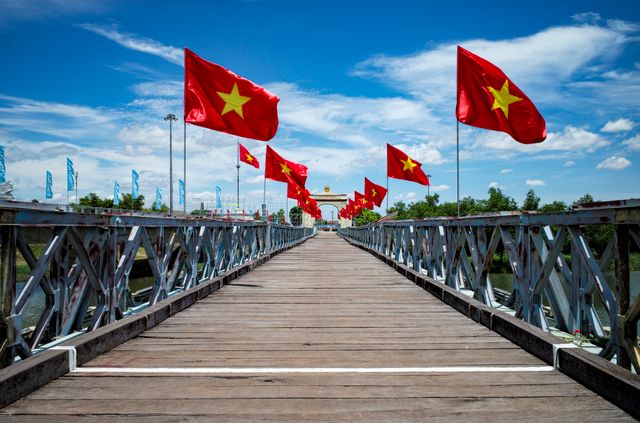
To the south lie Quang Tri Citadel and the Thach Han River. To the north are Hien Luong Bridge, the Ben Hai River and the Vinh Moc Tunnels. Follow National Route 9 west towards the Truong Son Mountains and the road leads to Khe Sanh – Ta Con – Lang Vay. Head towards the coast and beyond lies Con Co Island.
These places are deeply connected with one of the most turbulent chapters in Vietnam's modern history.
Yet when you travel through Quang Tri today, what stays with you most deeply may not be the memory of war.
It is the value of peace.
The Ben Hai River still flows quietly. Trees cast their shade across Quang Tri Citadel. Roads once associated with battlefields now lead travellers through peaceful villages, mountains, forests and islands.
A land once marked by division has now become a connecting point on a journey of heritage.
MY TRACH – GATEWAY TO THE CULTURAL LANDSCAPE OF LE THUY
My Trach may be a small railway station, but beyond it lies a place worth exploring slowly: Le Thuy.
Here, the Kien Giang River winds through villages and rice fields. This is also the homeland of Ho khoan Le Thuy, a traditional call-and-response form of folk singing that carries the voice, spirit and emotions of generations who have lived beside these waterways.
And if you arrive around 2 September, spend a morning beside the Kien Giang River.
While mist still lingers over the water, both riverbanks are already crowded. Rhythmic wooden beats echo across the river, long racing boats surge forward, and dozens of paddles strike the water together to the cheers of an entire community.
For the people of Le Thuy, this is Independence Festival – Tet Doc Lap, a special time when those who have moved away long to return home.
Le Thuy is also the homeland of General Vo Nguyen Giap, where travellers can discover the rural landscape associated with his childhood.
From My Trach, the journey can also turn west towards Bang Onsen and Dong Chau – Khe Nuoc Trong, where the rice-growing plains gradually give way to mountain streams, tropical forest and the landscapes of the Truong Son Range.
One railway station, yet two very different worlds:
On one side, the cultural landscape of Le Thuy. On the other, the forests of the Truong Son Mountains.
DONG HOI – THE CITY BESIDE THE NHAT LE RIVER
At Dong Hoi, the journey meets the sea.
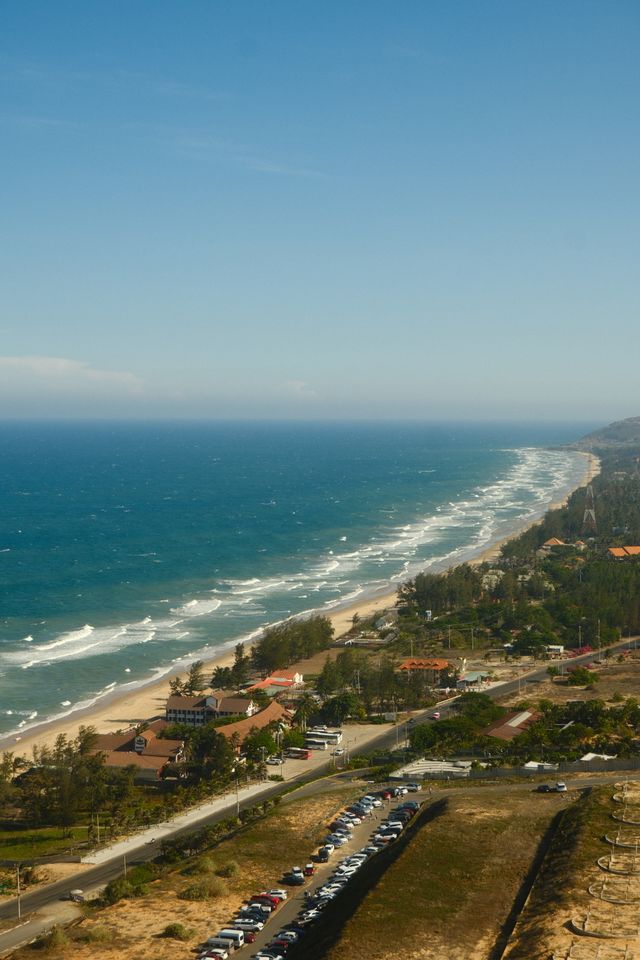
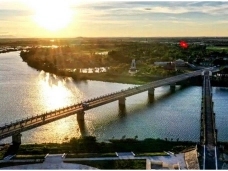
The Nhat Le River flows through the city before reaching the East Sea. Across the river lies Bao Ninh; to the north are the sweeping Quang Phu Sand Dunes; and within the city are historic landmarks such as Quang Binh Gate and the remains of Dong Hoi Citadel.
Dong Hoi is at its best when you are in no hurry.
Spend an afternoon swimming at Nhat Le Beach.
Stand on the Quang Phu Sand Dunes as the sun begins to sink towards the horizon.
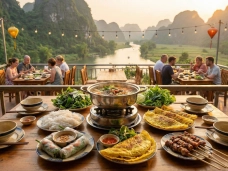
Enjoy a meal of fresh local seafood.
Then walk beside the Nhat Le River as the city lights begin to glow.
A breeze drifts in from the estuary, fishing boats return home, and this small riverside city takes on a quiet beauty of its own.
The next morning, board the train again.
Only one station remains.
THO LOC – THE GATEWAY TO PHONG NHA – KE BANG
The railway journey ends at Tho Loc.
But for travellers who love exploration, this is where the real adventure begins.
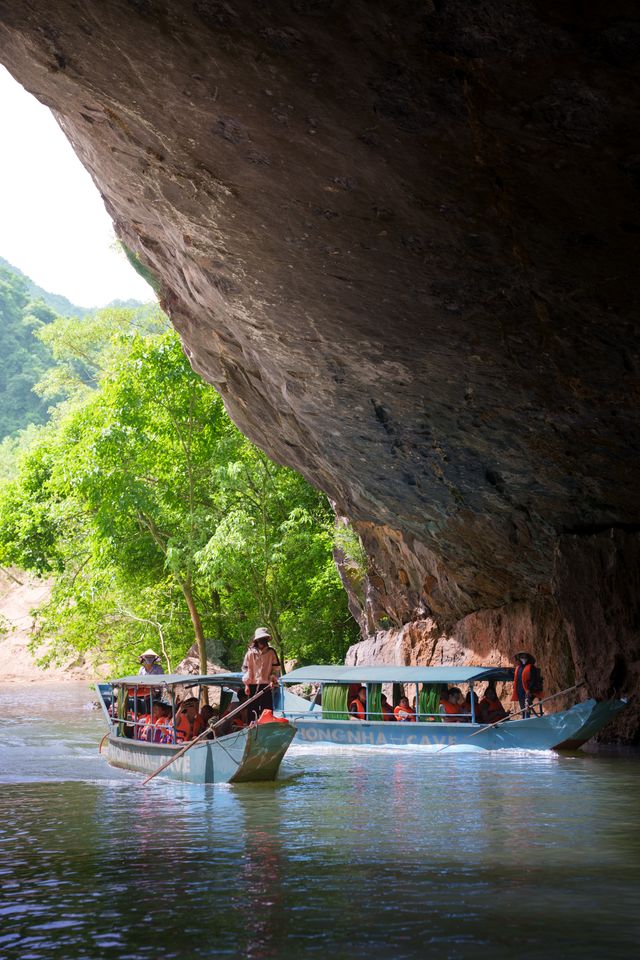
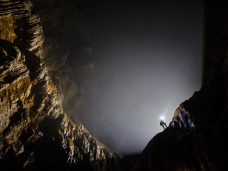
Ahead lies Phong Nha – Ke Bang — a world of limestone mountains, tropical forests, underground rivers and caves, set within a karst landscape whose geological history stretches back around 400 million years.
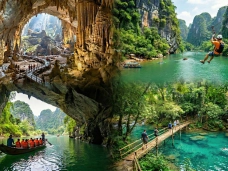
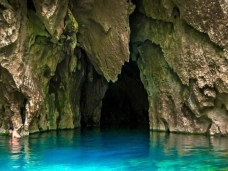
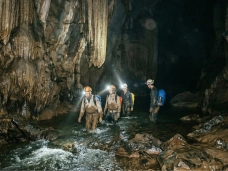
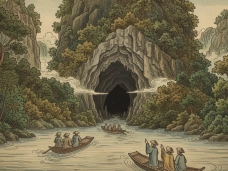
From here, travel towards the Son River and take a boat into Phong Nha Cave; walk beneath the spectacular formations of Paradise Cave; experience Chay River – Dark Cave; or spend time walking through the forest at the Phong Nha – Ke Bang Botanic Garden.
For travellers who want to venture further, Phong Nha opens into a much larger world of trekking routes, tropical forests, karst valleys and spectacular cave systems.
And here, at the end of the railway journey, you may find yourself thinking back to where it all began.
Hue — a heritage landscape shaped by people over centuries.
And now, before you, is Phong Nha – Ke Bang — a heritage landscape that nature has taken hundreds of millions of years to create.
189 KM – AND SO MUCH OF VIETNAM IN BETWEEN
On a map, it looks like nothing more than a railway line:
Hue → Dong Ha → My Trach → Dong Hoi → Tho Loc.
But step off at each station and the train ride can become a journey lasting several days.
Hue offers an imperial capital and the Perfume River.
Dong Ha opens the way to Quang Tri Citadel, the DMZ, Khe Sanh and Con Co Island.
My Trach leads to the Kien Giang River, Ho khoan folk singing, the 2 September boat-racing festival, the homeland of General Vo Nguyen Giap and the forests to the west.
Dong Hoi brings the Nhat Le River, Bao Ninh, beaches and the Quang Phu Sand Dunes.
And Tho Loc is the gateway to Phong Nha – Ke Bang.
So, if you have the time, do not simply travel from Hue to Phong Nha. Step off the train.
Stay for a night.
Go deeper into each destination.
Meet the people who live there.
Then continue your journey the following day.
Because some journeys are better when they are faster.
But there are other journeys where the slower you travel, the more you discover.
189 kilometres. Five railway stations. From the Imperial City of Hue to Phong Nha – Ke Bang.
One train journey through culture, history, rivers, coastline and the forests of the Truong Son Mountains — where every station opens the door to another world of heritage.
PHONG NHA – HUE HERITAGE TRAIN
A scenic railway journey of approximately 190 km, connecting Phong Nha – Ke Bang, Dong Hoi, Le Thuy, Dong Ha and the Imperial City of Hue.
5 Stations Along the Heritage Journey
Main HQ1 / HQ2 Railway Fares
| Route | Distance | Soft Seat NML |
VIP NML24 |
|---|---|---|---|
| Tho Loc ↔ Hue Full journey | 190 km | 380,000 VND | 760,000 VND |
| Tho Loc ↔ Dong Ha | 123 km | 369,000 VND | 738,000 VND |
| Dong Hoi ↔ Hue | 167 km | 367,000 VND | 735,000 VND |
| Dong Ha ↔ Hue | 66 km | 264,000 VND | 528,000 VND |
| Dong Hoi ↔ Dong Ha | 100 km | 360,000 VND | 720,000 VND |
| Tho Loc ↔ Dong Hoi | 23 km | 161,000 VND | 322,000 VND |
Fares above are standard published fares for selected main sections of the route and may be subject to railway policy changes.
50% OFF TRAIN FARES
Valid from 29 August to 5 September 2026 for eligible ticket classes on the route.
One Railway Journey, Many Stories of Central Vietnam
The Phong Nha – Hue Heritage Train is more than a way to travel between two destinations. The route connects the natural heritage of Phong Nha – Ke Bang with the cultural heritage of Hue, while passing through the historic landscapes of Le Thuy, Dong Hoi, Dong Ha and Quang Tri.
It offers travellers a slower and more meaningful way to discover Central Vietnam — from caves, rivers and rice fields to historic battlefields, local culture and the former imperial capital.
Explore Phong Nha & Hue with Phong Nha Viet
Combine the heritage train with private tours, cave experiences, transport and tailor-made journeys between Phong Nha, Quang Tri and Hue.
Phong Viet


Comments
Comments (Total 0)
Related Articles
28-08-2026
KIẾN GIANG – DÒNG SÔNG CHỞ KÝ ỨC XỨ LỆ
15-08-2026
Dong Hoi – Cam Ranh: Discover Khanh Hoa 2026

19-06-2026
MINI GAME CHINH PHỤC CỒN CỎ
24-04-2026
DMZ Vietnam Travel Guide 2026



12-12-2025