Phong Nha – Kẻ Bàng: From an Ancient Sea to a Karst World Hundreds of Millions of Years Old
15-06-2005 00:00
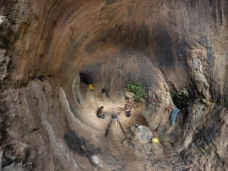
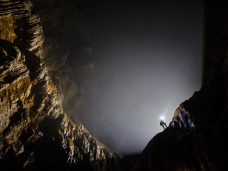
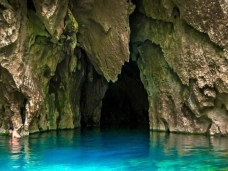
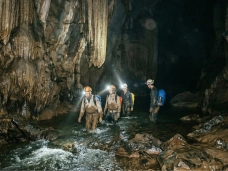
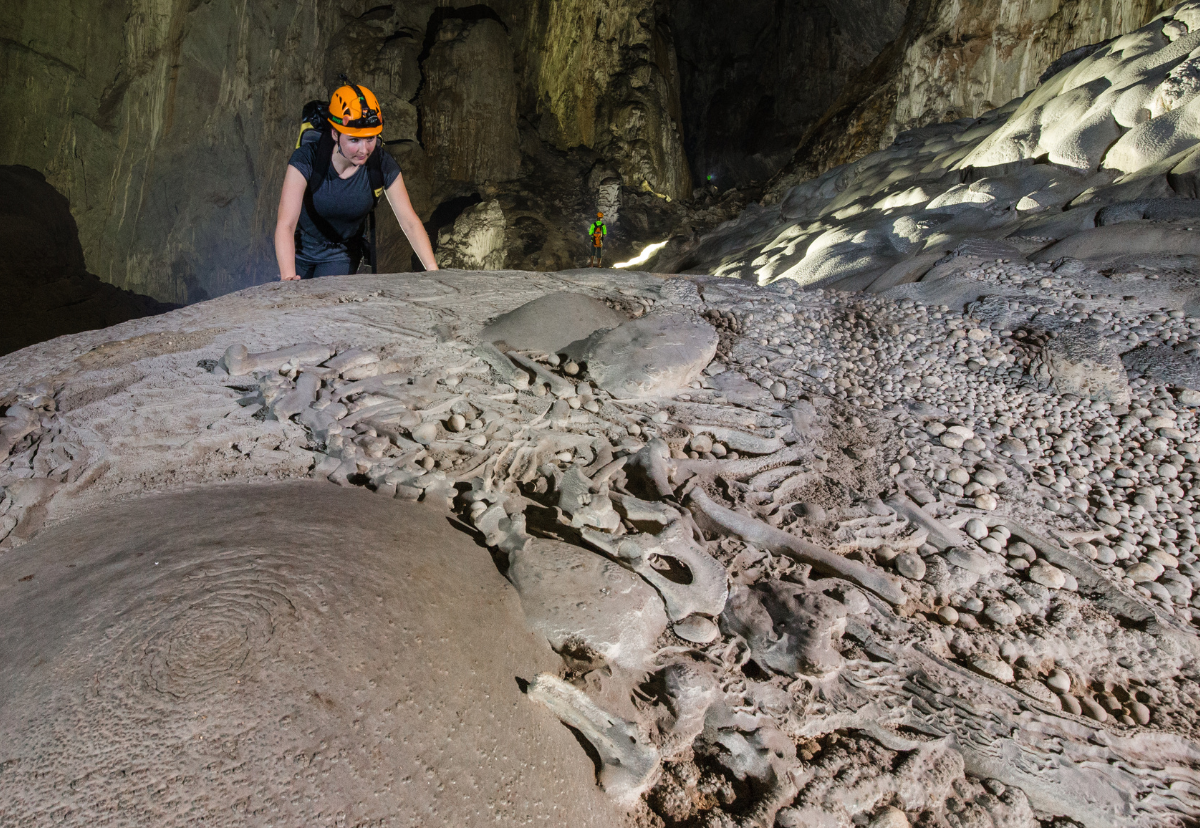
Today, the limestone massif of Phong Nha – Kẻ Bàng supports a tropical evergreen forest with a multi-layered canopy structure and very high forest cover, providing habitat for 2,953 plant species and 1,394 animal species in a wide variety of life forms. Within this vast limestone block lies an immense cave world, with 425 caves identified to date, together with a complex hydrological system comprising the Son, Chày, Troóc, Long Đại and Rào Nan rivers, as well as numerous underground watercourses threading through the rock like lifelines sustaining life itself. If present-day Phong Nha – Kẻ Bàng is an ecological and geological landscape of exceptional distinctiveness, then looking back hundreds of millions of years reveals a far longer story: a story of Earth history, ancient seas, and profound environmental changes that helped shape the magnificent karst landscape seen today.
When did the limestone massif of Phong Nha – Kẻ Bàng begin to form?
Limestone is a sedimentary rock composed chiefly of calcium carbonate (CaCO₃). It commonly forms in warm, shallow marine environments where organisms such as corals, calcareous algae, molluscs and many other marine groups accumulate shells, skeletal material and carbonate-rich organic remains over very long periods of time. From an environmental perspective, the formation of limestone is inseparably linked to the interaction of the hydrosphere, atmosphere and biosphere. In tropical shallow seas, where temperatures are relatively stable, light is abundant and biological activity is intense, carbonate-secreting organisms flourish; when they die, their remains and skeletal material settle on the sea floor, forming carbonate sediments that are gradually compacted and lithified over millions of years. Some palaeoenvironmental reconstructions suggest that tropical shallow seas with temperatures of around 25–30°C were especially favourable for this type of deposition.
In the case of Phong Nha – Kẻ Bàng, the key question is not simply when limestone first appeared on Earth, but when the limestone foundation of this region was deposited and transformed. According to the international geological timescale, the Ordovician Period lasted from approximately 485.4 to 443.8 million years ago, and the stratigraphic record of Phong Nha – Kẻ Bàng indicates that the area is associated with a very ancient geological history beginning in the Ordovician and continuing through many subsequent phases. Thus, when it is said that Phong Nha – Kẻ Bàng is around 400–450 million years old, this should be understood as referring to the great age of its geological foundation and parent rock, not to the idea that the entire karst mountain landscape has remained unchanged since that time.
During the Late Ordovician, the Earth presented an environmental setting very different from that of today. Some palaeoclimatic reconstructions suggest that global sea levels may then have stood far higher than at present, with some models proposing a figure of around 180 metres above modern levels, before falling sharply during the end-Ordovician glaciation. At the same time, the composition of the atmosphere was also markedly different: many models indicate that atmospheric oxygen was lower than today, perhaps only around 68% of the modern level, while CO₂ concentrations were extremely high, reaching approximately 4,200 ppm, or several thousand ppm depending on the model employed. Sea-surface temperatures also varied over time; some reconstructions suggest that the Late Ordovician witnessed a marked cooling trend associated with glaciation and major changes in the global climate system. Although these figures are reconstructions, they nevertheless help us to imagine an ancient environment in which the limestone foundation of Phong Nha – Kẻ Bàng began to form under climatic, atmospheric, sea-level and ecological conditions profoundly different from those of the Earth today.
This was also the period during which the Earth passed through one of the five great mass extinctions. The end-Ordovician extinction, which occurred around 444 million years ago, was associated with the expansion of glaciation, a fall in sea level, and the rapid contraction of shallow continental seas — environments that had previously supported exceptionally rich life. Changes in climate, the oceans, glaciation and the atmosphere therefore affected not only living organisms, but also directly influenced the deposition of carbonate sediments, which formed the original material basis of the Phong Nha – Kẻ Bàng limestone massif.
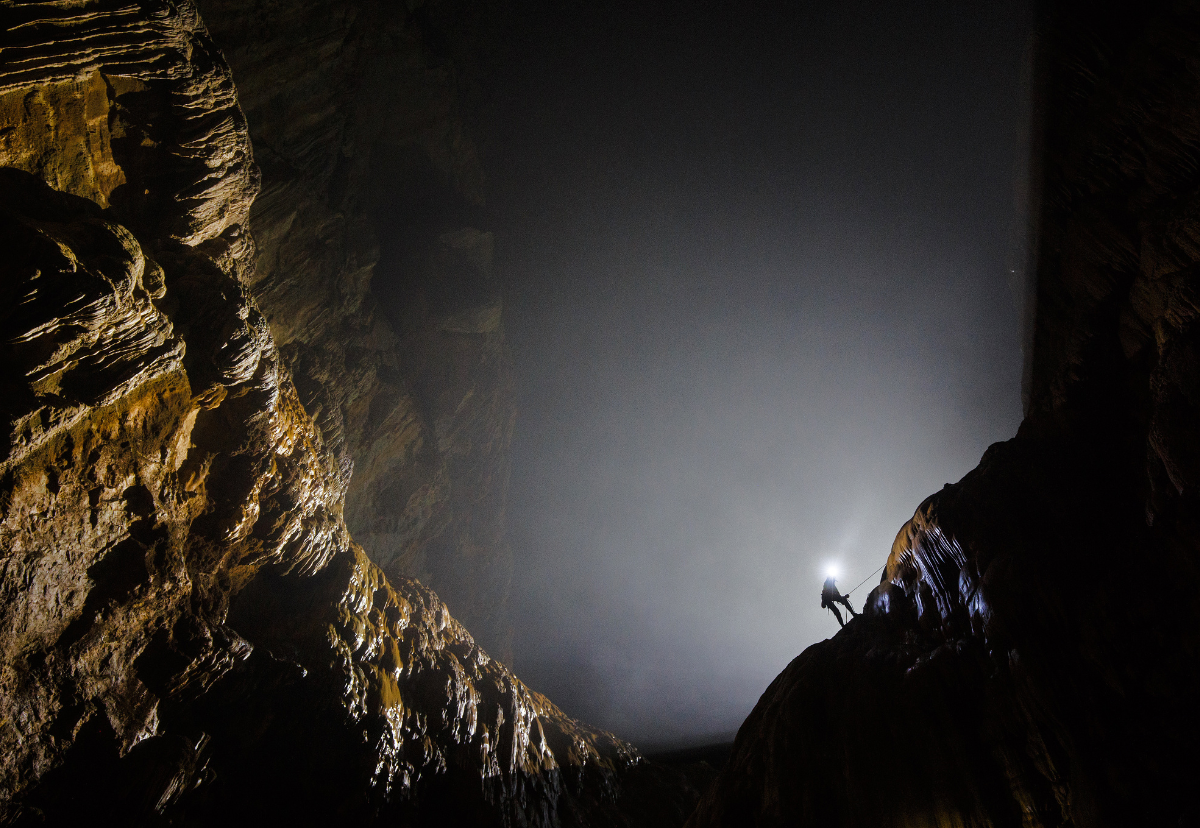
It may be envisaged that the limestone massif of Phong Nha – Kẻ Bàng was formed from carbonate-rich marine sediments accumulated over many phases, before being uplifted by tectonic movements within the Earth’s crust. From an ancient marine bedrock, the region continued to undergo episodes of fracturing, uplift, weathering and prolonged karstification. Under conditions of a humid tropical climate, rainwater, surface water and groundwater gradually dissolved the limestone, widening fissures and giving rise to underground rivers, sinkholes, enclosed valleys and an immense cave system. It is precisely the combination of an ancient marine history, long-term tectonic activity and humid tropical environmental conditions that has produced the unique karst landscape of Phong Nha – Kẻ Bàng today.
Did Phong Nha – Kẻ Bàng already exist on land some 450 million years ago?
The continents — now home to most of the Earth’s life — have undergone an extraordinarily complex history of amalgamation, fragmentation and movement. In palaeogeography, supercontinents such as Rodinia, Pannotia, Gondwana and Pangaea serve as major reference points for understanding the movement of the Earth’s crust through deep time. Rodinia is thought to have formed around 1.1 billion years ago and to have begun breaking apart approximately 750 million years ago. Later, Pannotia existed roughly between 600 and 540 million years ago. By the Ordovician, Gondwana had become the great southern supercontinent, while other continental blocks such as Laurentia, Baltica and Siberia formed important components of the palaeogeographical picture of that age.
For Phong Nha – Kẻ Bàng itself, however, a more careful and scientifically sound formulation is this: the geological foundation of the region began to form very early, within a context of major palaeogeographical upheaval on Earth, whereas the present-day continental and karst landscape is the result of a long sequence of transformations unfolding over hundreds of millions of years thereafter. In other words, the great antiquity of Phong Nha – Kẻ Bàng reflects the history of its parent rock, its ancient seas, tectonic activity and karstification processes; it should not be interpreted simplistically as meaning that the entire mountain massif has stood unchanged on dry land for more than 450 million years. It is the transition from an ancient marine environment to a continental setting, and then to a humid tropical karst environment, that provides the real key to understanding the full history of this heritage landscape.
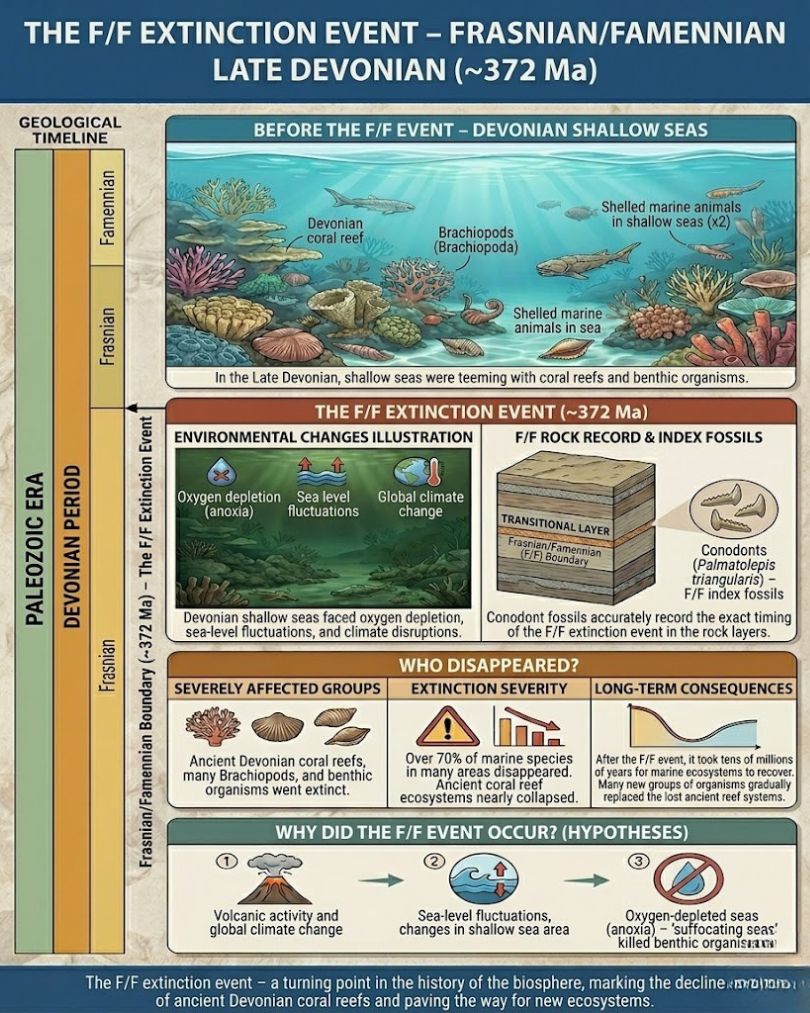
What was ancient life like in Phong Nha – Kẻ Bàng?
During the Late Ordovician and the subsequent phases of the Palaeozoic Era, most life was still concentrated in the sea. This shows that environmental factors at the time were decisive: the sea remained the principal living space, while terrestrial environments had not yet become the dominant habitat for life. Many marine groups flourished, then declined or became extinct through major crises. In the end-Ordovician extinction, the groups most severely affected included brachiopods, trilobites, bryozoans, graptolites and many other marine organisms. This was not merely a biological crisis, but also the expression of an environmental crisis on a planetary scale.
Today, Phong Nha – Kẻ Bàng still preserves palaeontological indicators in the form of fossils within its limestone strata, including rugose corals, crinoids, stromatoporoids and brachiopods. These fossils show that the area was once an ancient marine environment, inhabited by benthic communities and reef-building organisms characteristic of the Palaeozoic. Environmentally, their presence points to a sea that was relatively favourable for life: shallow enough, stable enough, and with a substrate suitable for organisms to inhabit, attach themselves to, and ultimately leave traces in the sediment. In other words, within the limestone massif of Phong Nha – Kẻ Bàng today there still survives the memory of an ancient ocean that disappeared hundreds of millions of years ago.
Looking more closely at individual groups, crinoids belong to the class Crinoidea within the phylum Echinodermata, and were already present very early in the Palaeozoic. Brachiopoda were among the most important invertebrate groups of ancient seas. Stromatoporoids were once major reef-builders during the Ordovician and Devonian. These lines of evidence not only help to identify the relative age of the rock, but also contribute to reconstructing the ancient environments in which the limestone of Phong Nha – Kẻ Bàng was formed.
The primeval picture of Phong Nha – Kẻ Bàng
The primeval picture of Phong Nha – Kẻ Bàng has been reconstructed from multiple layers of evidence: stratigraphy, palaeontology, palaeoclimate, palaeogeography and geomorphology. These data make it possible to affirm that this is a limestone region of extraordinarily long development, beginning more than 400 million years ago, and passing through many phases of marine transgression and regression, tectonic movement, topographic uplift and intense karstification. Environmental factors such as tropical shallow seas, fluctuations in sea level, high atmospheric CO₂, lower oxygen levels than today, the cooling trend towards the end of the Ordovician, glaciation and the reorganisation of ancient continents are all important pieces in understanding the context in which this limestone massif was formed.
Seen in this way, the history of Phong Nha – Kẻ Bàng is one of long-term interaction between the lithosphere, hydrosphere, atmosphere and biosphere. The lithosphere provided the limestone foundation; the hydrosphere governed sediment deposition, dissolution and cave formation; the atmosphere influenced climate, temperature, rainfall and the carbon cycle; while the biosphere both contributed to the formation of carbonate sediments and adapted, declined or disappeared in response to environmental change through evolution and extinction. It is the ceaseless interaction of these four spheres that has made Phong Nha – Kẻ Bàng at once ancient in geological terms, rich in ecology, and outstanding in scientific value.
Even so, the history of the Earth in general, and of Phong Nha – Kẻ Bàng in particular, still contains many gaps that require further study. Modern science can establish ages, identify fossils, reconstruct ancient environments and explain part of the movement of the Earth’s crust, but not every detail is known with absolute certainty. For that very reason, the most scientific approach is to distinguish clearly between established facts, evidence-based inference, and hypotheses that still require verification. From this perspective, Phong Nha – Kẻ Bàng emerges not merely as a natural heritage site of limestone mountains, forests and caves, but as a vast geological library, preserving some of the Earth’s most ancient chapters of history.
Tue Minh


Comments
Comments (Total 0)
Related Articles


28-08-2026
KIẾN GIANG – DÒNG SÔNG CHỞ KÝ ỨC XỨ LỆ
15-08-2026
Dong Hoi – Cam Ranh: Discover Khanh Hoa 2026


19-06-2026
MINI GAME CHINH PHỤC CỒN CỎ

24-04-2026