


Decoding the Origins of Phong Nha – Ke Bang: A Journey Through History
13-12-2025 11:01
Main contents
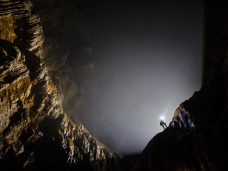
Phong Nha – Ke Bang is globally recognized as a UNESCO World Heritage site. However, few realize that this name is not a modern creation but a result of overlapping toponymic layers dating back to at least the 16th century, and perhaps even deeper in local memory.
Phong Nha: An Ancient Name in Classical Records
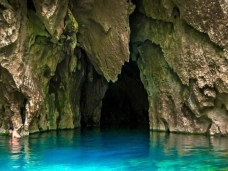
The name Phong Nha was recorded in O Chau Can Luc by Duong Van An—a vital geographical gazetteer compiled in the 16th century. Historical descriptions depict a vast cave system with underground rivers and majestic landscapes, proving that Phong Nha was a well-known scenic wonder long before modern tourism "discovered" it.
By the Nguyen Dynasty, records like Dai Nam Nhat Thong Chi continued to document this limestone system. In toponymy, it is common for a natural space to carry multiple names over time, reflecting the perspectives of the royal court, scholars, and local inhabitants.
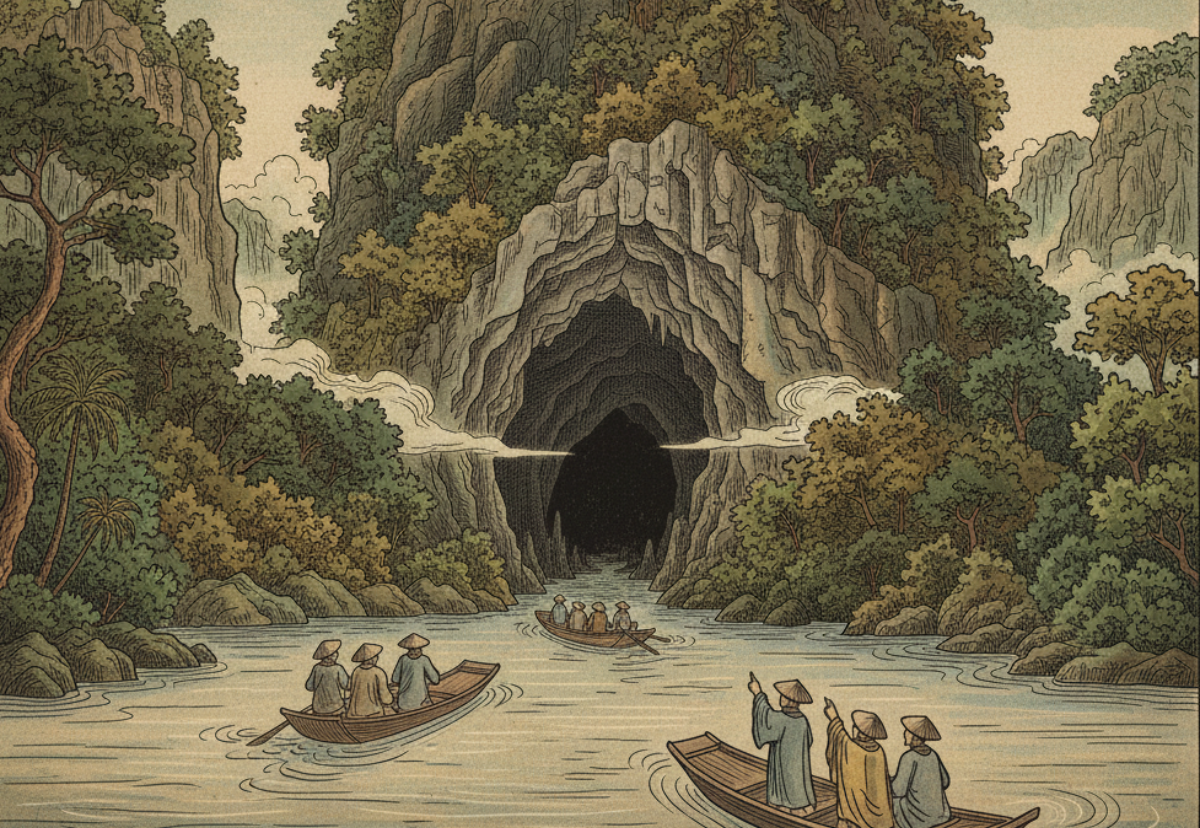 Phong Nha Cave, as illustrated in the 16th century.
What does "Phong Nha" mean?
Two parallel interpretations exist today:
- Sino-Vietnamese Etymology: "Phong" (Wind) and "Nha" (Teeth), evoking images of wind whistling through stalactites that resemble jagged teeth.
- Toponymic Approach: Phong Nha likely originated as the name of an ancient village or settlement, which was later used to identify the area's most prominent cave.
Ke Bang: The Often Overlooked Ancient Vietnamese Layer
Unlike "Phong Nha," the element Ke Bang often sparks curiosity. In ancient Vietnamese, "Kẻ" is a common prefix meaning village, region, or settlement. Many ancient names in Northern and North-Central Vietnam follow this pattern (e.g., Ke Cho, Ke Mo).
17th-century records of the Vietnamese alphabet (Quoc Ngu) mention "Ke Bang Parish," proving it was a distinct residential unit, not an abstract concept. The word "Bang" is likely a local proper name transcribed into characters, rather than a word with a specific Han-Viet meaning like "side" or "almond tree."
Why the composite name "Phong Nha – Ke Bang"?
The compound name used today emerged in the late 20th century to reflect a broader conservation scope. In 2001, Phong Nha – Ke Bang National Park was officially established, becoming a legal and scientific identifier for the region’s unique geological and ecological values.



Comments
Comments (Total 2)
Sarah Jenkins
27-01-2026
Alexander Thorne
27-01-2026
Related Articles

28-08-2026
KIẾN GIANG – DÒNG SÔNG CHỞ KÝ ỨC XỨ LỆ
15-08-2026
Dong Hoi – Cam Ranh: Discover Khanh Hoa 2026

19-06-2026
MINI GAME CHINH PHỤC CỒN CỎ

24-04-2026
DMZ Vietnam Travel Guide 2026












12-12-2025