Quang Tri Travel: A Journey Through Natural and Cultural Heritage
16-05-2024 00:00
Main contents
- 1. Historical, Cultural, and Natural Values
- 1.1. Historical Values
- 1.2. Cultural Values
- 1.3. Natural Values
- 2. Destinations on the Journey to Quang Tri
- 2.1. Vinh Moc Tunnels
- 2.2. Quang Tri Ancient Citadel
- 2.3. Bru - Van Kieu Community Tourism Village
- 2.4. Cua Tung Beach
- 2.5. Cua Viet Beach
- 2.6. Con Co Island
- 2.7. Khe Sanh
- 2.8. Hien Luong Bridge - Ben Hai River
- 2.9. The Demilitarised Zone (DMZ)
- 2.10. Truong Son National Martyrs' Cemetery
- 2.11. Route 9 National Martyrs' Cemetery
- 2.12. Dakrong Nature Reserve
- 3. Festivals
- 4. Tour to Quang Tri
Location
Highlight Image



Quang Tri is a province located in the North Central Coast region of Vietnam, and it is also one of the prominent destinations on the Central Heritage trail. It harbours profound historical values with heroic tales from the nation's two resistance wars.

Historical, Cultural, and Natural Values
Historical Values
Quang Tri was initially a dinh (camp/palace) established by King Nguyen Anh in 1801 after he regained power. In 1827, it was changed to a tran (garrison), and in 1832 to a province. After several mergers with Hue and Quang Binh, Quang Tri province was re-established in July 1989, with its provincial capital situated in Dong Ha town.
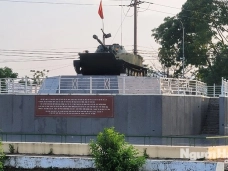
Quang Tri holds a special position in the course of Vietnamese history, particularly in the modern era. Following the 1954 Geneva Accords, the Ben Hai River at the 17th parallel became the temporary military demarcation line, dividing the country for over 20 years (1954–1975). This area formed the Demilitarised Zone (DMZ), but in reality, it was one of the fiercest battlefields.
During the war, Quang Tri endured a colossal volume of bombs and shells. According to various studies, this area is among the most heavily bombed places in the world per square metre. The 1972 campaign alone turned the Quang Tri Ancient Citadel into a symbol of one of the most brutal battles in history.
The Vinh Moc Tunnels system is a remarkable testament to human adaptability: nearly 2 km long and comprising 3 levels ranging from 10 to 23 metres deep, it served as a living space for hundreds of locals for many years.
Today, these landmarks are not merely relics but "spaces of memory", contributing to the formation of Quang Tri's characteristic historical and educational tourism.
Cultural Values
The history of Quang Tri is closely intertwined with the Vietnamese people's southward expansion (Nam tiến). From the 13th and 14th centuries, this area was a transitional zone between Dai Viet and the Champa kingdom, creating a unique space for cultural intersection.
Quang Tri is a land with a rich history; a place where the imprints of various cultures meet, converge, and interact. It was once considered the crossroads between the Champa and Dai Viet cultures, and a stopping point for the Vietnamese on their journey to expand their territory to the South. The intangible cultural heritage of Quang Tri has been built by the Cham, Viet, Bru - Van Kieu, and Ta Oi ethnic groups throughout thousands of years of history.
Notably, Quang Tri's culture is not strongly manifested through grand structures, but rather exists within daily life: from community organisation and folk beliefs to a lifestyle perfectly adapted to the harsh natural conditions.
It is precisely this "tranquillity" that creates its cultural depth – a crucial element that sets Quang Tri apart from mass tourism destinations.
Natural Values
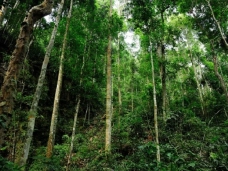
Quang Tri's nature stands out with its mountains, forests, and islands. Western Quang Tri possesses diverse forest resources in terms of species, typified by the Bac Huong Hoa Nature Reserve. Khe Sanh - Huong Hoa features a distinct climate, being cool all year round, making it suitable for high-value crops such as coffee, tea, and vegetables. This area is home to many high mountains and beautiful waterfalls such as Ta Lung mountain, Ta Puong waterfall, and Chenh Venh waterfall, creating a majestic and appealing landscape for nature-loving tourists.
Quang Tri covers an area of approximately 4,700 km², stretching from the Truong Son mountain range to the East Sea, forming a diverse topographical structure rarely seen within a single central province.
-
The West: mountainous and forested regions belonging to the Truong Son range.
-
The Centre: plains and river systems such as the Thach Han and Ben Hai.
-
The East: a coastline of about 75 km featuring beaches like Cua Tung and Cua Viet.
This topographical stratification creates multiple distinct ecosystems within a relatively small space, ranging from tropical forests to island ecosystems like Con Co.
Unlike "spectacular" natural destinations, Quang Tri's nature leans towards balance and pristineness, aligning perfectly with the trends of sustainable tourism and long-stay experiences.
Destinations on the Journey to Quang Tri
Vinh Moc Tunnels
A magnificent subterranean architectural marvel, where the resilient people of Vinh Linh lived and fought with all their might for the nation's independence. This is truly a world of living and fighting underground, completely isolated from the outside world. The Vinh Moc Tunnels are a historical and cultural relic of immense historical and educational value, symbolising the immortal patriotism, indomitable will, and ingenuity of our forefathers during the resistance years.
Quang Tri Ancient Citadel
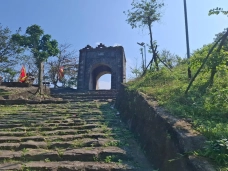
Also known as the Old Citadel of Quang Tri, this is a special national relic. Previously, the citadel was the administrative seat of the Nguyen Dynasty and a military fortress in the Quang Tri territory. During the French colonial period, it served as the provincial centre of Quang Tri at that time. Notably, during the 1972 general offensive and uprising, the Quang Tri Ancient Citadel became known worldwide as it was associated with the nation's heroic 81-day-and-night battle.
Bru - Van Kieu Community Tourism Village
Leveraging the inherent natural landscape, the Bru - Van Kieu ethnic minority in the mountainous commune of Huong Viet, Huong Hoa district (Quang Tri) has developed community-based tourism at Ta Puong waterfall. Visiting here, tourists will have the opportunity to learn about the indigenous culture, witness the daily life of the Bru - Van Kieu community, enjoy their cultural and artistic performances, and be served authentic mountain cuisine.
Cua Tung Beach
Located in Vinh Linh district, this beach is situated about 30 km northeast of Dong Ha city, Quang Tri. It attracts visitors with its fresh, cool atmosphere. The natural scenery here is incredibly poetic, earning it the title of the 'paradise of beaches'. Its unspoiled nature promises to bring you a novel and peaceful experience.
Cua Viet Beach
Cua Viet Beach is where the Hieu River merges into the East Sea. Not merely a location of strategic economic and defence significance, Cua Viet is also a land rich in natural and cultural values, bearing the marks of the nation's glorious historical periods. With its pristine beach, abundant ecosystem, and cultural heritage intertwined with fishermen's lives, Cua Viet is a potential destination for sustainable tourism, as well as a repository of Quang Tri's profound historical memories. This article will explore the natural and cultural values of Cua Viet, from ancient history to the present day, along with solutions to sustainably conserve and develop this area.
Con Co Island
Con Co Island is located nearly 30 km from Cua Viet port, Gio Linh district, Quang Tri province, and is also known by other names such as Hon Co, Con Ho, or Hon Me. Formed by tectonic activity from volcanic eruptions, the island boasts geological and ecological values, with a landscape akin to a natural museum featuring unique basalt rock terraces along the coast, and small pristine beaches formed from coral debris, shells, scallops, and sand. With an area of about 2.3 km², of which over 70% is primary forest, Con Co Island is one of the few places in Vietnam that still preserves a nearly intact 3-tiered tropical forest ecosystem. Therefore, one of the fascinating experiences not to be missed when visiting Con Co is exploring the primary forest amidst the sea, enjoying the fresh air, and discovering the island's rich flora and fauna.
Khe Sanh
Khe Sanh is a town in the mountainous district of Huong Hoa (Quang Tri province) located on the trans-Asian highway. During the war years, Khe Sanh was a name etched in history, associated with fierce battles. Currently, Khe Sanh still retains vestiges of the war such as Lao Bao prison and Ta Con airport. Tourism in Khe Sanh - Huong Hoa converges many historical and cultural values, and is also a place with a beautiful climate and landscape, often likened to a "mini Da Lat".
Hien Luong Bridge - Ben Hai River
Hien Luong Bridge and the Ben Hai River are part of the Hien Luong twin-bank relic cluster at the intersection of National Route 1A and the Ben Hai River; the northern bank belongs to Hien Luong village, Vinh Thanh commune, Vinh Linh district; the southern bank belongs to Xuan Hoa village, Trung Hai commune, Gio Linh district, Quang Tri province. These are two "historical witnesses" bearing the pain of the country's division into North and South for over 20 long years.
The Demilitarised Zone (DMZ)
The 17th parallel demilitarised zone carries immense historical significance. It is widely known internationally as the Vietnamese Demilitarised Zone (V-DMZ), a demilitarised zone established on 21 July 1954 along the two banks of the Ben Hai River under the 1954 Geneva Accords on Indochina. Its initial purpose was as a temporary military demarcation line separating the gathering zones between the forces of the Democratic Republic of Vietnam and the French army and its allied forces.
Truong Son National Martyrs' Cemetery
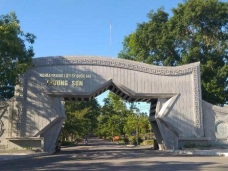
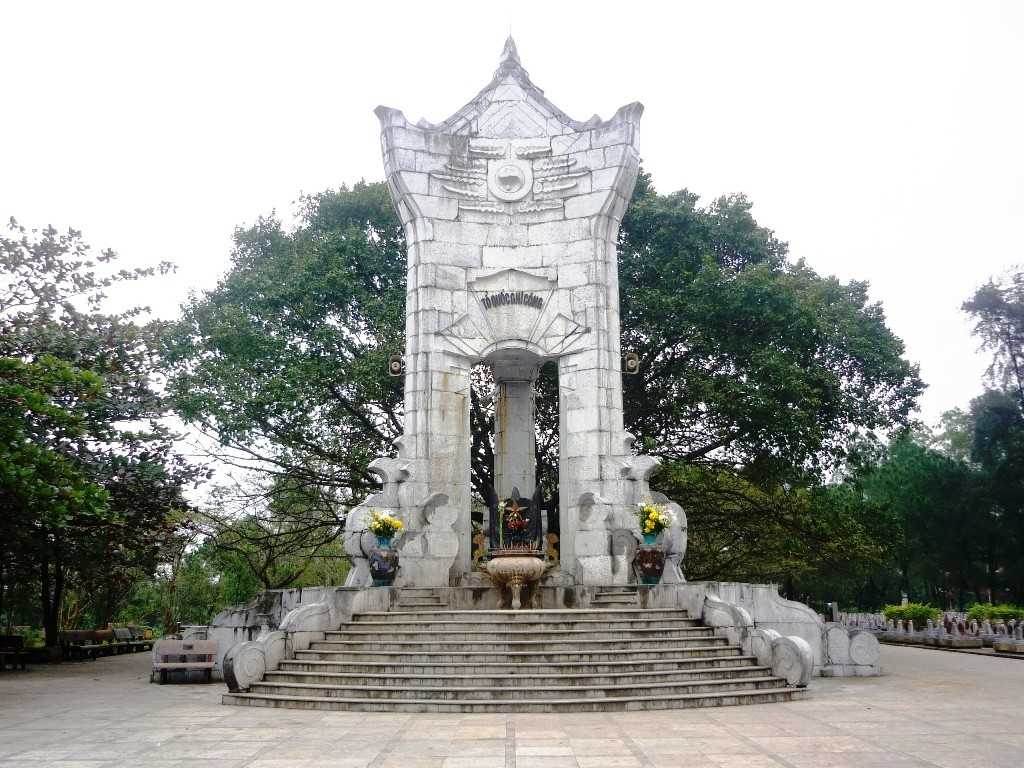
Built in 1975 on Ben Tat hill, Truong Son Cemetery is the resting place of over 10,000 martyrs who fought and sacrificed their lives on the legendary Truong Son trail – the Ho Chi Minh trail. The space here is solemnly planned and in harmony with nature, expressing profound gratitude to those who fell for national independence.
Route 9 National Martyrs' Cemetery
Situated on the strategic traffic axis connecting Dong Ha with the Lao border, Route 9 National Martyrs' Cemetery is the burial site for over 10,000 martyrs from various forces who sacrificed their lives on the Route 9 front and the Route 9 – Khe Sanh area. Both cemeteries are not merely memorials but "spaces of memory" carrying profound educational value, where every footstep serves as a reminder of a heroic and sacrificial period in the nation's history.
Dakrong Nature Reserve
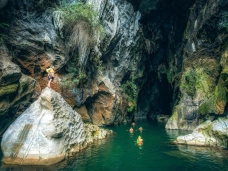
Dakrong Nature Reserve is one of Quang Tri's crucial ecological zones, covering an area of over 40,000 hectares along the Truong Son range. This area features high mountain terrain interspersed with valleys, and an abundant river and stream system, facilitating the strong development of humid tropical forests. Dakrong is outstanding for its biodiversity, serving as home to many rare and precious flora and fauna species, especially primates, forest birds, and endemic plants. Many of these have high conservation value and are listed in the Red Data Book. Regarding the landscape, the reserve bears a pristine beauty with ancient forests, rocky streams, waterfalls, and vast natural expanses. It is an ideal destination for research, exploration, and sustainable ecotourism, where one can clearly feel the originality of the Truong Son ecosystem.
Bac Huong Hoa Nature Reserve
Bac Huong Hoa Nature Reserve is located in the northwest of Quang Tri, within the Truong Son biodiversity corridor – one of Southeast Asia's areas of high biological value. The reserve boasts extensive forest cover and a relatively intact ecosystem. It stands out for its rich biodiversity, recording many rare, precious, and endemic species of flora and fauna. This area also plays a vital role in conserving endangered species and maintaining the region's ecological balance. In terms of landscape, Bac Huong Hoa impresses with its primary forests, high mountainous terrain, and deep valleys, creating a majestic yet tranquil natural space. With its high degree of pristineness, this area is highly suitable for trekking, exploration, and the development of controlled ecotourism.
 Cuisine
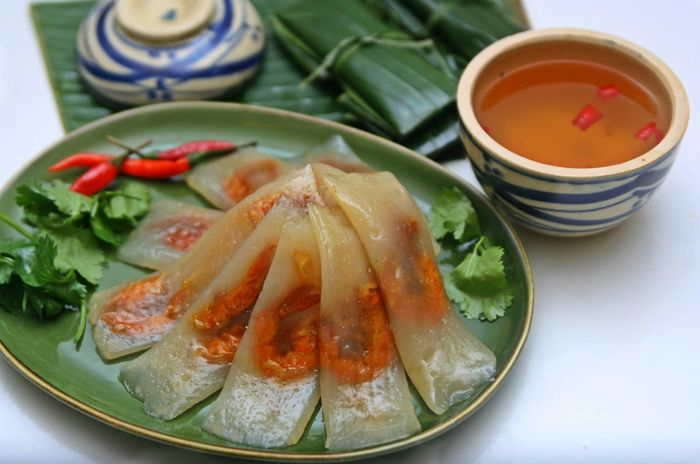
Banh Khoai Banh Khoai (Khoai cake) is also one of Quang Tri's specialities; its preparation looks quite similar to the southern Banh Xeo at first glance, but they are entirely different. Banh khoai takes the round shape of the casting mould, topped with a little bean sprouts, shrimp, and meat. The cake is usually eaten with raw vegetables and a dipping sauce.
Chao Vac Giuong Chao Vac Giuong (Vac Giuong porridge) - called porridge, but it is not like a normal porridge. Quang Tri's flour porridge is cooked with rice flour strands and snakehead fish. Locals call it fish porridge, while visitors from afar often refer to it as cháo vạt giường.
Bap Ham Bap ham (Stewed corn) is an unforgettable delicacy when you visit Quang Tri. To make this delicious stewed corn, one must select plump, shiny, bright yellow sticky corn kernels to stew. Washed thoroughly and soaked overnight, very early the next morning, they are taken out before the night dew has dropped, put into a pot, and simmered over a low fire with dry firewood. Waiting until the corn is just cooked, they uncover the pot and add pre-prepared ingredients, such as boiled mung beans, sugar, salt, pepper, and a little sesame, mixing them all together.
Festivals
Cu-Snatching Festival (Lễ hội cướp cù) This is a traditional cultural festival that has existed for hundreds of years, regularly organised by the people of Cam Pho village during the Lunar New Year for everyone to have fun and pray for a bountiful new harvest and a prosperous life. The cù ball is carved from a large porcelain banana root, about 20cm to 30cm in diameter. There are 3 cù balls to play in 3 rounds, and according to the locals' belief, the 3 cù balls also symbolise the three realms (the three powers): Heaven - Earth - Humanity. In each round, if a team throws the cù into their basket first, that team wins and the round ends immediately, even if the allotted time has not expired.
La Vang Marian Pilgrimage Festival (Lễ hội Kiệu La Vang) The La Vang palanquin festival is organised by the Catholic community every year on the 15th of August to commemorate the event of the "Apparition of the Virgin Mary". Coming to the La Vang palanquin festival, visitors can not only immerse themselves in the bustling and joyful atmosphere of the parade delegations but also witness the sacredness and reverence for the Virgin Mary, bearing profound religious significance.
Boat Racing Festival (Lễ hội đua thuyền) Once every three years, on the fourth and fifth days of the first lunar month, at the Gia Do confluence, Gia Do village, Trieu Do commune, Trieu Phong district, Quang Tri province, a vibrant and bustling traditional boat racing festival takes place. Participating in the race are strong young men skilled in river navigation. Visitors coming here can cheer for the competing teams and witness the dramatic race between the boats to reach the finish line first.
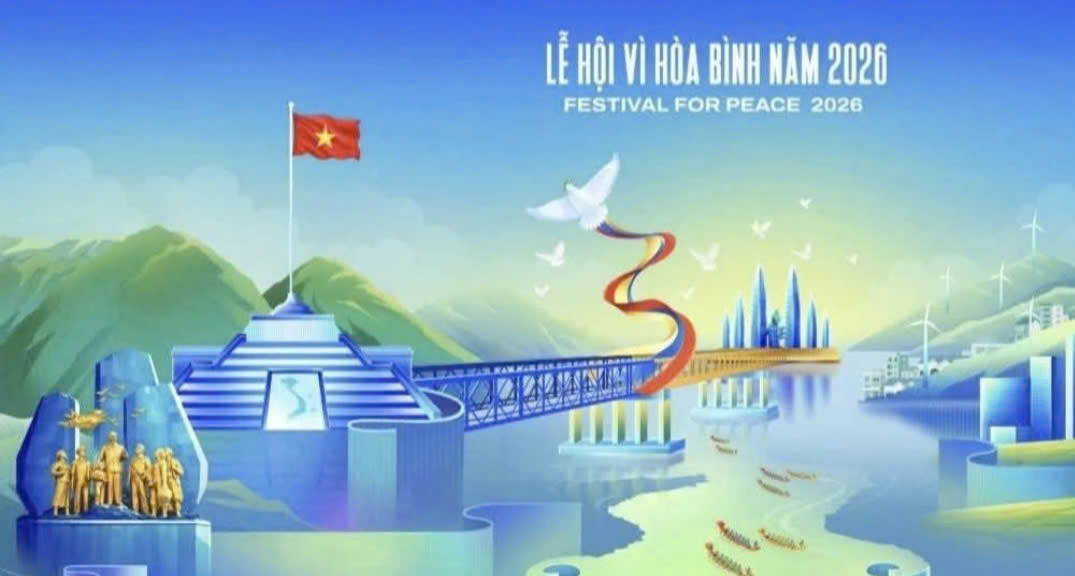
Festival for Peace in Quang Tri (Lễ hội Vì Hòa Bình tại Quảng Trị) This is a large-scale cultural and tourism event, carrying special significance in spreading the message of peace from a land that once endured the immense pain of war. Organised throughout the year with diverse activities, the festival is not merely a series of events but a journey connecting memory and the present, history and the aspiration for development. The highlight of the festival lies in the combination of tribute and commemoration activities with art programmes, sports, and modern tourism experiences. Historical landmarks like Hien Luong Bridge or the Vinh Moc Tunnels serve not only as backdrops but become experiential spaces, where visitors can clearly feel the value of peace and the sacrifices of the past. Not stopping at its commemorative meaning, the festival also contributes to positioning Quang Tri as a new destination for experiential and emotional tourism. This is an opportunity for visitors to explore a Quang Tri that is both profound and innovative, where history is not only retold but also lived alongside.
Tour to Quang Tri
Phong Viet