What Makes Phu Quoc Special? History, Nature and Culture
10-04-2024 11:30
Main contents
- 1. From a frontier island in the South
- 2. From a frontier island to an island city
- 3. Forests, sea and a diverse ecosystem
- 4. Marine and coral values
- 5. Fishing-village culture and maritime beliefs
- 6. The fish sauce trade – a long-standing cultural hallmark
- 7. Nature-based experiences
- 8. Local cultural experiences
- 9. Island and beach destinations
- 9.1. Bai Sao
- 9.2. An Thoi Archipelago – Hon Thom
- 9.3. Ganh Dau
- 10. Natural destinations
- 11. Local cultural destinations
Location
Highlight Image
What Makes Phu Quoc Special?
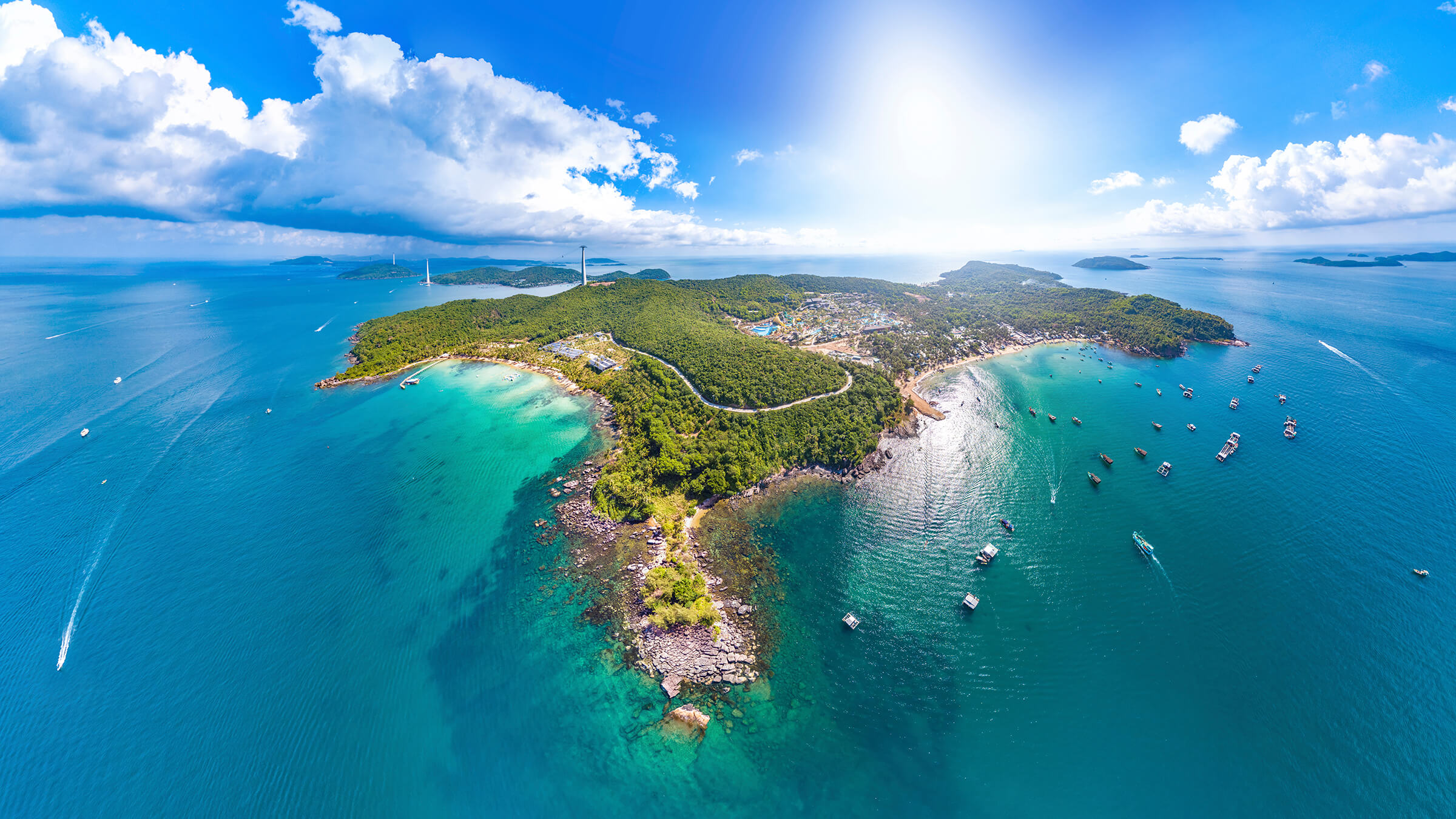
Phu Quoc is the largest island in Vietnam, located in the Gulf of Thailand and belonging to Kien Giang Province. According to local information, the waters around Phu Quoc contain 27 islands of various sizes. Phu Quoc Island itself covers approximately 574 km², stretches about 50 km in length, reaches around 25 km at its widest point, and has its highest peak at Mount Chua, 603 metres above sea level. It is precisely this structure — one island containing forests, mountains, streams, beaches, and surrounding islets — that gives Phu Quoc its distinctly individual character.
On 9 December 2020, the Standing Committee of the National Assembly issued Resolution No. 1109/NQ-UBTVQH14 on the establishment of Phu Quoc City. This milestone not only changed its administrative status, but also demonstrated that Phu Quoc had moved from being an island district to assuming a new position on Vietnam’s map of maritime and tourism development.

History of Phu Quoc
From a frontier island in the South
The history of Phu Quoc is often mentioned in connection with the Mac family during the process of opening up the Ha Tien region. According to documents from the Management Board of the Phu Quoc Economic Zone, in 1671 Mac Cuu led around 400 people from Fujian to the southern seas. By about 1680, he had established scattered settlements in the region; the name Koh Tral was gradually changed to Phu Quoc, meaning a prosperous or wealthy land. The years 1708, 1714 and 1724 are associated with the process by which Mac Cuu made contact with, pledged allegiance to, and presented land to the Nguyen Lords; by 1729, Long Ho garrison had come to be regarded as a prosperous territory in the Gulf of Thailand.
From a frontier island to an island city
Seen across the long span of time, Phu Quoc has undergone a rather remarkable journey: from an island associated with territorial expansion, it became a space for settlement, trade and fishing, and has now become an island city. The milestone of 2020 is therefore highly significant: it shows that Phu Quoc is no longer viewed merely as a beautiful beach destination, but as a new growth pole for the south-western region of Vietnam.
The Natural Value of Phu Quoc
Forests, sea and a diverse ecosystem
One of the greatest values of Phu Quoc Island is the depth of its natural environment. Vietnam’s official tourism website states that more than 50% of the area of Phu Quoc Island and the surrounding waters still retain strong natural value. This space lies within the Kien Giang Biosphere Reserve, recognised by UNESCO in 2006, which protects a system of 105 islands, of which Phu Quoc is the largest.
The northern part of the island is especially important ecologically. According to Vietnam Tourism, more than half of northern Phu Quoc belongs to Phu Quoc National Park, home to evergreen forest, wetlands, mangrove forest, coastal mudflats and seagrass beds. The same source also notes that this area is home to more than 200 native bird species, along with many animals such as monkeys, lorises and langurs.
Marine and coral values
Phu Quoc is not only beautiful on land; it also possesses a highly valuable marine ecosystem. According to Vietnam Tourism, 41% of the area around the islands within the biosphere reserve consists of hard coral reefs, soft coral systems and associated fish species. The seagrass beds here are also important habitats for sea turtles and dugongs, a species that is extremely rare in Vietnam. These figures show that Phu Quoc is not merely a leisure destination, but also a marine ecological zone that needs to be preserved with great care.
The Climate of Phu Quoc
Phu Quoc has a tropical monsoon climate. Owing to its low latitude and surrounding sea, the weather is generally milder than in many inland areas. According to local sources, the climate here is divided into two distinct seasons: the dry season and the rainy season. The dry season is influenced by the north-east monsoon, with average humidity of about 78%; the highest temperatures can reach 35°C in April and May. The rainy season has humidity of around 85–90%, average rainfall of about 414 mm per month, and annual rainfall of roughly 3,000 mm, with some places in the north of the island reaching as much as 4,000 mm per year.
This also explains why Phu Quoc has two very different kinds of beauty: in the sunny season, the sea is calm and the sky is clear, making it ideal for island excursions and resort holidays; in the rainy season, the forests are greener, the streams stronger, and the landscape feels cooler and full of vitality.
The Cultural Value
Fishing-village culture and maritime beliefs
Phu Quoc is not only rich in scenery, but also has a very distinct maritime culture. One of its typical cultural activities is the Dinh Cau Festival, held annually on the 15th day of the 10th lunar month. According to the Phu Quoc tourism portal, this is the occasion when fishermen on the island come to offer incense and pray for calm seas and favourable voyages. This small detail alone is enough to show the deep relationship between the people of Phu Quoc and the sea: they not only make their living from the sea, but also live with it through faith and gratitude.
The fish sauce trade – a long-standing cultural hallmark
When speaking of Phu Quoc culture, it is very difficult to overlook the fish sauce trade. The Kien Giang provincial information portal states that Phu Quoc fish sauce has a history of more than 200 years. It is not merely a food-processing craft, but also a body of local knowledge tied to anchovies, salt, wooden barrel houses, and fermentation techniques handed down through many generations.
This value has also been affirmed internationally. The Ministry of Industry and Trade notes that in 2013, Phu Quoc fish sauce became the first product of Vietnam to be granted geographical indication protection in the European Union, and at the same time the first ASEAN product to be protected as a designation of origin within the European Union. The National Office of Intellectual Property has also recorded that the geographical indication “Phu Quoc” for fish sauce had already been protected in Vietnam since 2001.

Experiences on Phu Quoc Island
Nature-based experiences
A memorable journey in Phu Quoc does not revolve solely around swimming. You may visit its famous beaches, but you should also make time for the forests, streams and the smaller islands to the south. According to Vietnam Tourism, snorkelling, diving, boating among the islands of the An Thoi Archipelago, or trekking in the northern forested region are all distinctive experiences because they connect directly with Phu Quoc’s forest–sea biosphere.
Local cultural experiences
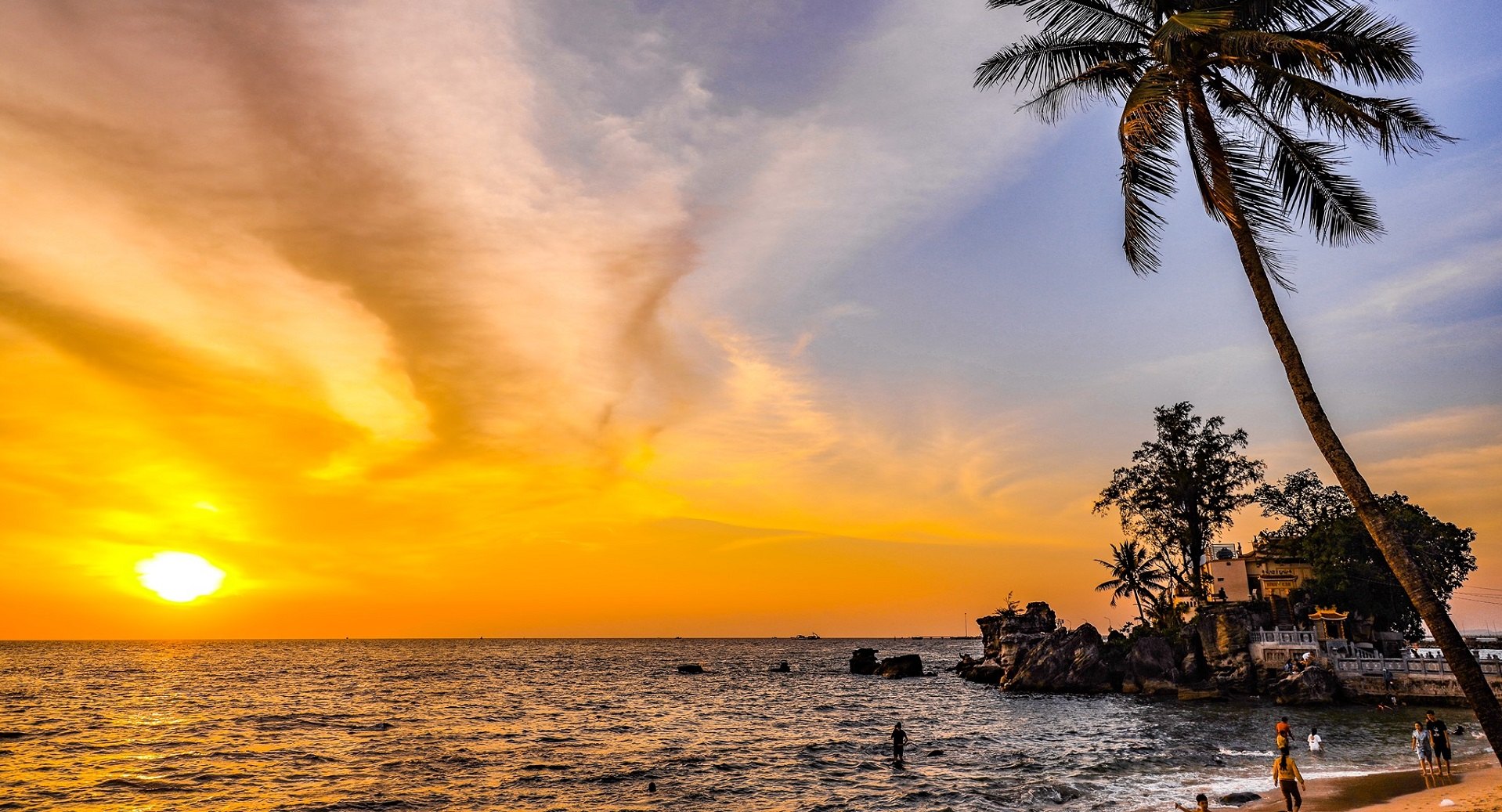
Another aspect of tourism in Phu Quoc lies in very ordinary things: visiting a fishing village, strolling through the night market, touring a traditional fish sauce barrel house, or watching the sunset at Dinh Cau. These are the experiences that make the journey more than simply “going to the beach”; they make it a journey to understand how a community has lived with wind, salt water and the fishing trade through many generations.
Phu Quoc Cuisine
Phu Quoc cuisine is attractive because it is both rustic and deeply flavoured by the sea. Most prominent, of course, is Phu Quoc fish sauce, a seasoning that has become a brand tied to the island’s name for more than two centuries. Alongside it are dishes associated with the lives of fishermen, such as crab, herring, sea urchin, squid, shellfish and fresh seafood. The rich marine resources around the biosphere reserve also contribute to the distinctive quality of local ingredients, especially squid, cuttlefish and anchovies.
The Best Time to Visit Phu Quoc
If you prioritise beautiful seas, clear skies and a gentle itinerary, the easiest time to travel is usually the dry season. According to local data, the dry season in Phu Quoc lasts from about the 11th lunar month to the 4th lunar month of the following year, while the rainy season runs from about the 5th to the 10th lunar month. Therefore, the period from the end of the year to the beginning of the next is often more suitable for resort holidays, island excursions and sightseeing; the rainy season, meanwhile, is better suited to those who enjoy the lush green of forest streams and a slower island rhythm.

Notable Destinations
Island and beach destinations
Bai Sao
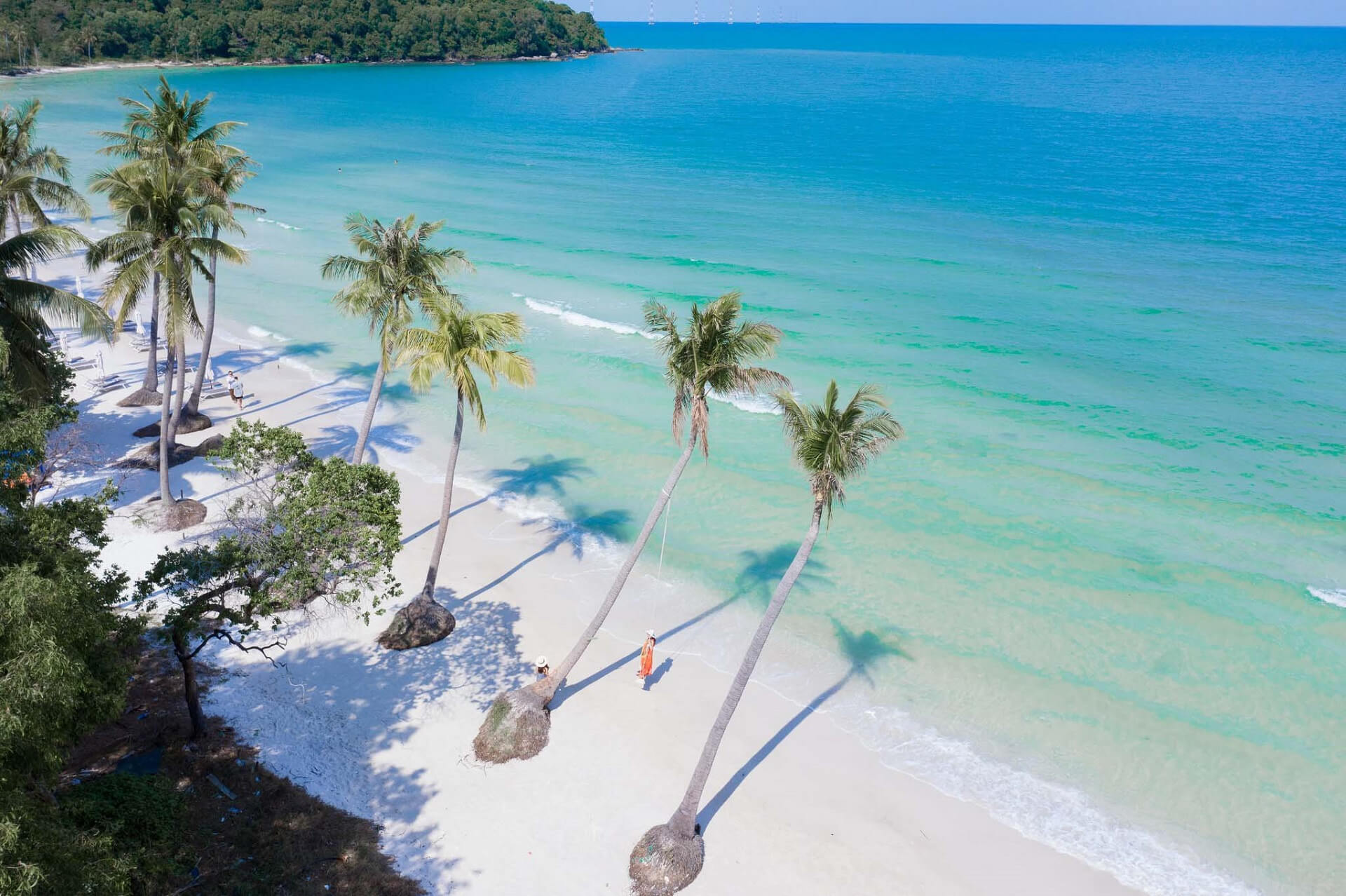
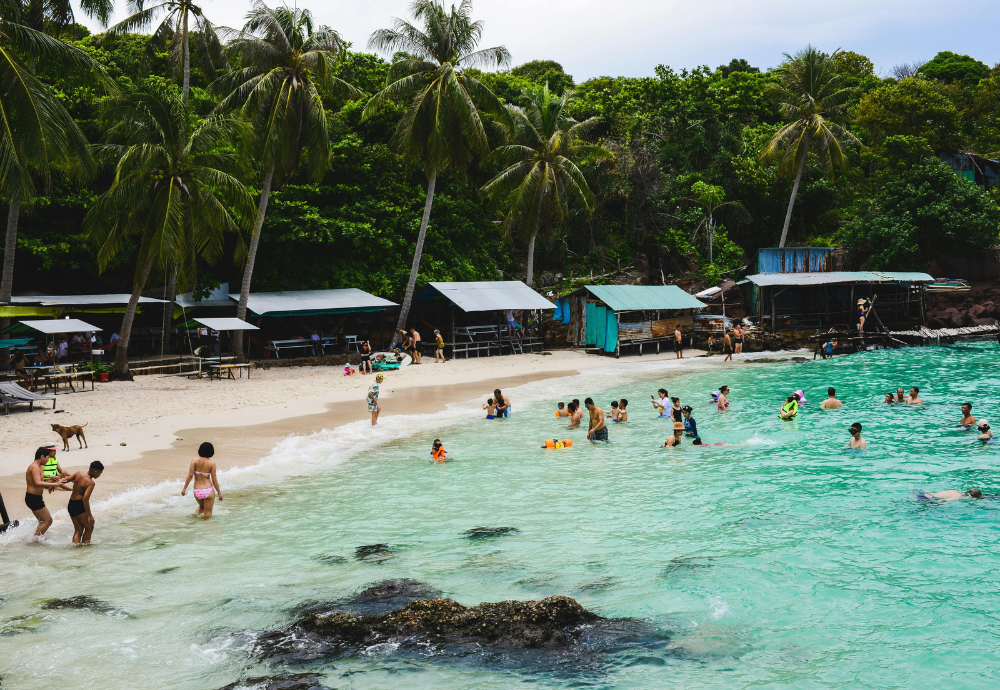
This is the most famous beach in Phu Quoc, well suited to holidaymakers who enjoy pale sand, blue water and a gentle, relaxing atmosphere. Bai Sao is ideal for swimming, photography and unwinding amid the very characteristic scenery of the “Pearl Island”.
An Thoi Archipelago – Hon Thom
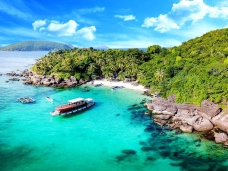
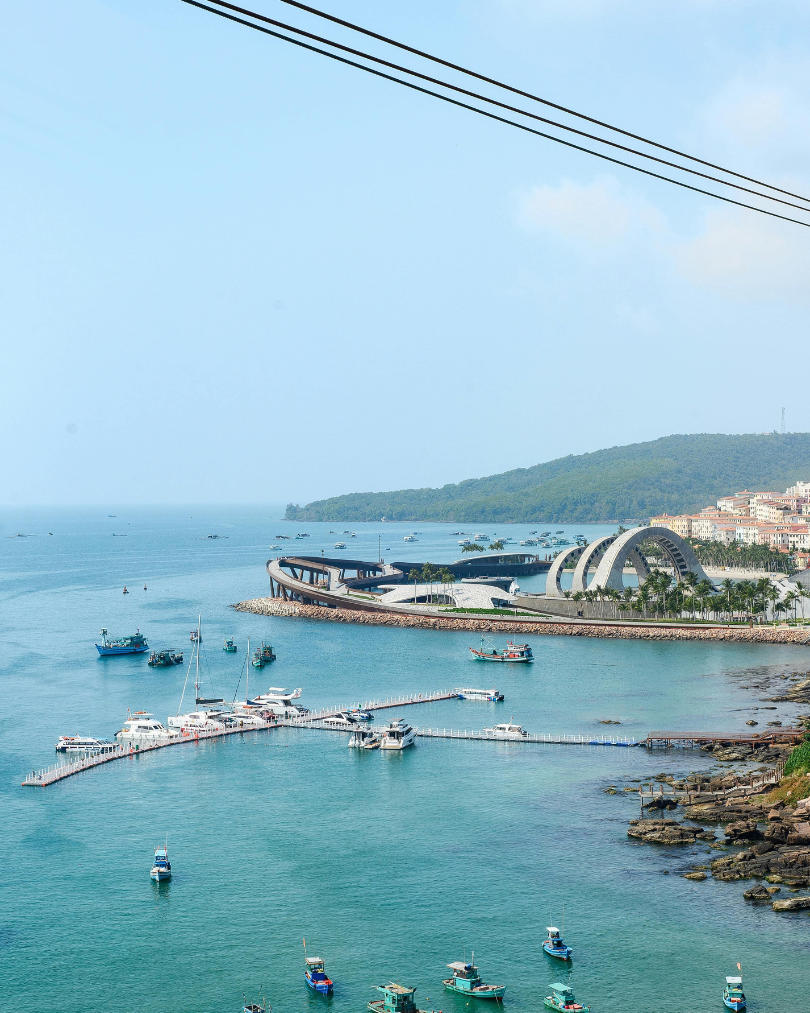
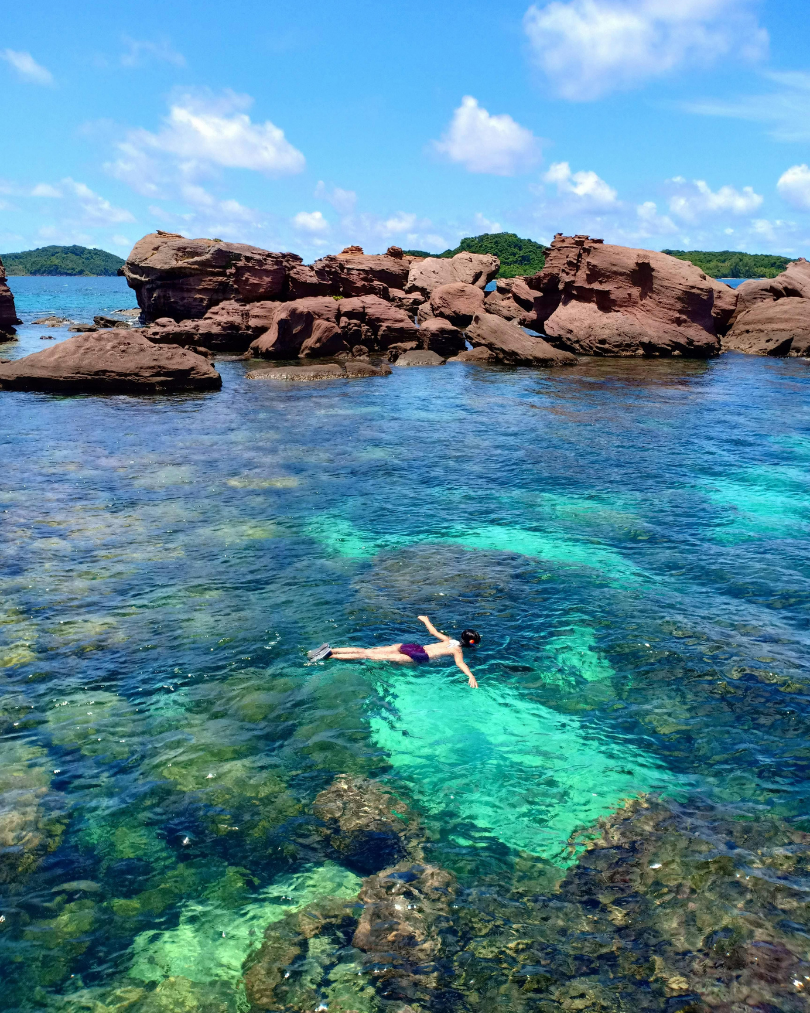
This is an excellent choice for visitors seeking a genuine island-and-sea experience. The area stands out for activities such as speedboat trips among the small islands, coral diving, sea swimming and outdoor recreation. According to official tourism sources, the waters around the islands within the biosphere reserve have a very rich coral ecosystem; this particular area is one of the most prominent locations for snorkelling and island hopping.
Ganh Dau
Ganh Dau suits visitors who prefer a quieter, more open and less crowded side of Phu Quoc than the central area. It is an ideal place to admire the sea, travel slowly, and appreciate the gentle beauty of the island’s northern side.
Natural destinations
Phu Quoc National Park
This is a highly recommended destination for nature lovers. According to Vietnam’s tourism sources, more than half of the northern part of the island is associated with a protected ecological zone, featuring evergreen forests, wetlands, mangrove forests and many native bird species. It is a suitable place for light trekking, forest appreciation and discovering the “deep green” side of Phu Quoc.
Mount Chua and the northern forest region
If visitors enjoy expansive landscapes and the feeling of touching the island’s more untouched side, the mountainous and forested area in the north is well worth visiting. This is an entirely different type of experience from a beach holiday, and is particularly suitable for younger visitors and those who enjoy exploration.
Local cultural destinations
Dinh Cau
Dinh Cau is a place that deserves a place on any itinerary, as it is both beautiful for sunset viewing and a symbol of Phu Quoc’s maritime culture. It helps visitors understand more about the beliefs of the island’s fishing communities.
Ham Ninh Fishing Village
Ham Ninh is suitable for visitors who want to see a more intimate side of Phu Quoc: boats, seafood, jetties and the rhythm of fishing-village life. It is a very fitting destination for local experiences and seafood cuisine.
Fish sauce barrel houses and Duong Dong Night Market
If you want to experience Phu Quoc through taste and local rhythm, these are places worth visiting. They may not be overly grand, but they give the journey more depth and make it more memorable.
Phu Quoc is attractive because it brings together many layers of value in a single destination: it has a history of territorial expansion marked by milestones in 1671, 1708, 1714 and 1724; it gained a new status under the 2020 Resolution; it possesses a forest–sea ecosystem within a UNESCO Biosphere Reserve recognised since 2006; and it has a fish sauce craft of more than 200 years, granted EU protection in 2013. When all these layers are placed side by side, Phu Quoc appears not merely as a beautiful “Pearl Island” for resort tourism, but as a maritime region with very clear historical, ecological and cultural depth.
Phong Nha Viet tours to Phu Quoc
Phong Việt